
Edwardian homes have a lighter, more decorative character than many Victorian properties, and the front door plays an important part in that overall look. From glazed panels and timber detailing to deep greens, rich reds and softer heritage colours, there are plenty of ways to give an Edwardian entrance some personality while still respecting the age of the property.
For homeowners replacing an original door, the challenge is often finding the right balance. A completely modern door can look out of place against Edwardian brickwork and traditional windows, while an overly elaborate design may not suit the simpler lines found on many Edwardian houses.
Fortunately, you don’t need to recreate the original door exactly. The proportions, glazing, colour and smaller details can all be adapted to create an entrance that feels right for the house while offering the security, insulation and practicality expected from a modern front door.
What makes an Edwardian front door different?
Edwardian architecture covers a relatively short period, generally from 1901 to 1910, although the influence of the style continued into the years that followed. Edwardian homes tend to be less ornate than many late Victorian properties, with a greater emphasis on light, space and natural materials.
The front door can reflect this.
Edwardian doors are often associated with:
- Glazed panels and decorative glass
- Traditional timber construction
- Fielded or recessed panels
- Simple but carefully considered mouldings
- Natural or painted finishes
- Brass or black door furniture
- Wider entrances and porches on some properties
Stained glass is particularly useful when looking for Edwardian front door ideas. It allowed natural light into the hallway while providing privacy, and decorative glazing could introduce colour without making the entrance feel overly elaborate.
Of course, Edwardian houses vary considerably. A London terrace will look very different from a larger suburban semi-detached house, so the existing architecture should always be the starting point.
Edwardian front door styles to consider
There isn’t one single Edwardian front door design. Some are relatively simple, while others feature decorative glazing and more elaborate timberwork.
Panelled front doors
Fielded or recessed panels give the door some depth without making it too decorative, and the number and arrangement of panels can be adapted to suit the proportions of the opening.
For a particularly traditional appearance, pair the panels with a glazed section towards the top of the door. This creates the opportunity to introduce decorative glass while retaining plenty of solid timber below.
A painted finish can also make the panel detailing more noticeable, particularly when used in a deeper heritage colour.
Glazed Edwardian front doors
If there’s one feature that can instantly change the character of an Edwardian entrance, it is decorative glazing.
Edwardian houses were often designed with an emphasis on natural light, so a front door with glass can be both practical and sympathetic to the architecture.
Stained or textured glass can bring colour into the entrance while obscuring the view from outside. Smaller panes, geometric patterns and coloured borders can all work well, depending on the style of the property.
You don’t necessarily need a large amount of glass either. A relatively modest glazed panel can make a noticeable difference to a darker hallway.
Front doors with sidelights
Some Edwardian homes have wider entrances that allow for a sidelight alongside the front door.
This can be particularly effective if you want to introduce more light without making the door itself predominantly glazed.
A narrow sidelight with matching decorative glass can also make an entrance feel more balanced. Where the property has a wider porch or recessed doorway, a pair of sidelights can create an impressive entrance while still retaining a traditional appearance.
This is more dependent on the existing opening than other design choices, so it is worth considering the proportions of the whole entrance before deciding.
The best colours for Edwardian front doors
Colour is one of the easiest ways to change the appearance of an Edwardian house.
There is a tendency to assume that period properties need muted colours, but Edwardian architecture can accommodate richer and more distinctive shades. Historical references show dark green, deep red and woodgrain effects among the colours associated with Victorian and Edwardian exterior joinery.
The important thing is to look at the rest of the property before choosing a colour.
What colour is the brickwork? Are the windows white, cream or painted? Is there decorative stonework around the entrance? Does the house have original stained glass?
All of these details can influence which front door colour works best.
Dark green
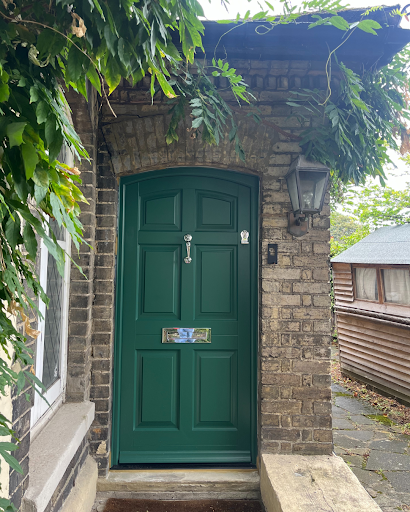
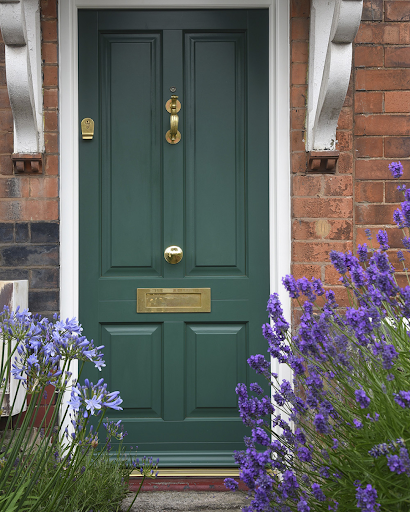
Green is a natural choice for an Edwardian front door. Deep heritage greens can look particularly good against red brick and are sympathetic to the traditional character of the property without being as formal as black.
For a classic look, consider shades such as:
- Farrow & Ball Studio Green
- Farrow & Ball Duck Green
- Little Greene Obsidian Green
- RAL 6005 Moss Green
- RAL 6009 Fir Green
A dark green door also works well with brass hardware and decorative glass.
Deep red and burgundy


Rich reds can make an Edwardian entrance feel warmer and more welcoming. Rather than choosing a bright primary red, deeper shades such as burgundy, wine red and oxblood tend to sit more comfortably alongside traditional brickwork.
They can be particularly effective against darker red brick, although the exact shade should be tested against the property rather than chosen from a colour chart alone.
Consider:
- Farrow & Ball Eating Room Red
- Little Greene Baked Cherry
- RAL 3005 Wine Red
- RAL 3004 Purple Red
A deep red door paired with brass furniture and decorative glazing can create a particularly traditional Edwardian look.
Navy blue
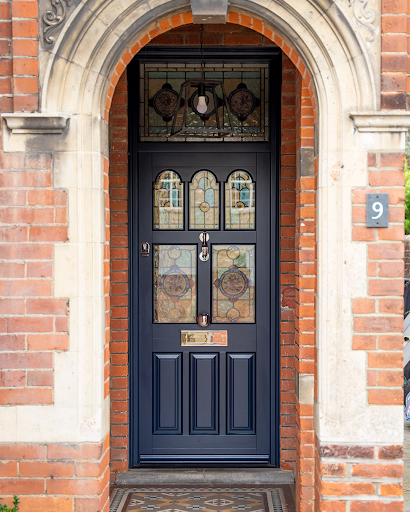
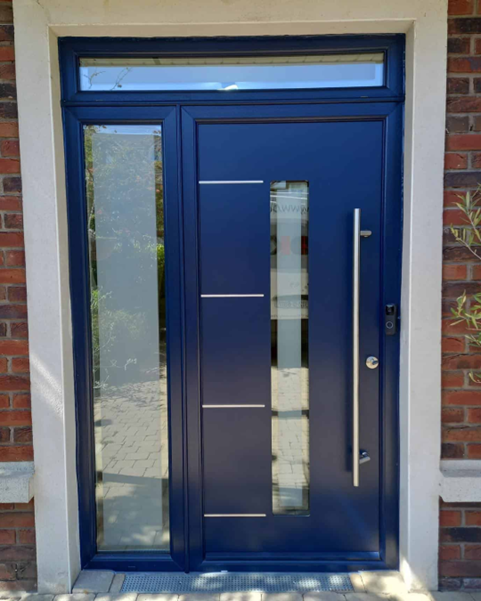
Navy is another versatile choice for a period property. It has a similar visual weight to black but introduces more colour, which can make the entrance feel slightly softer.
Deep blues work particularly well against pale brick and painted façades, but they can also create a striking contrast with red brick.
For a more traditional appearance, look at shades such as Farrow & Ball Hague Blue or Stiffkey Blue, Little Greene Dock Blue or a dark RAL blue.
Black
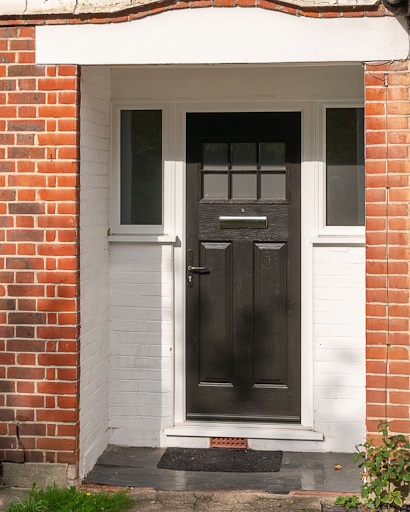
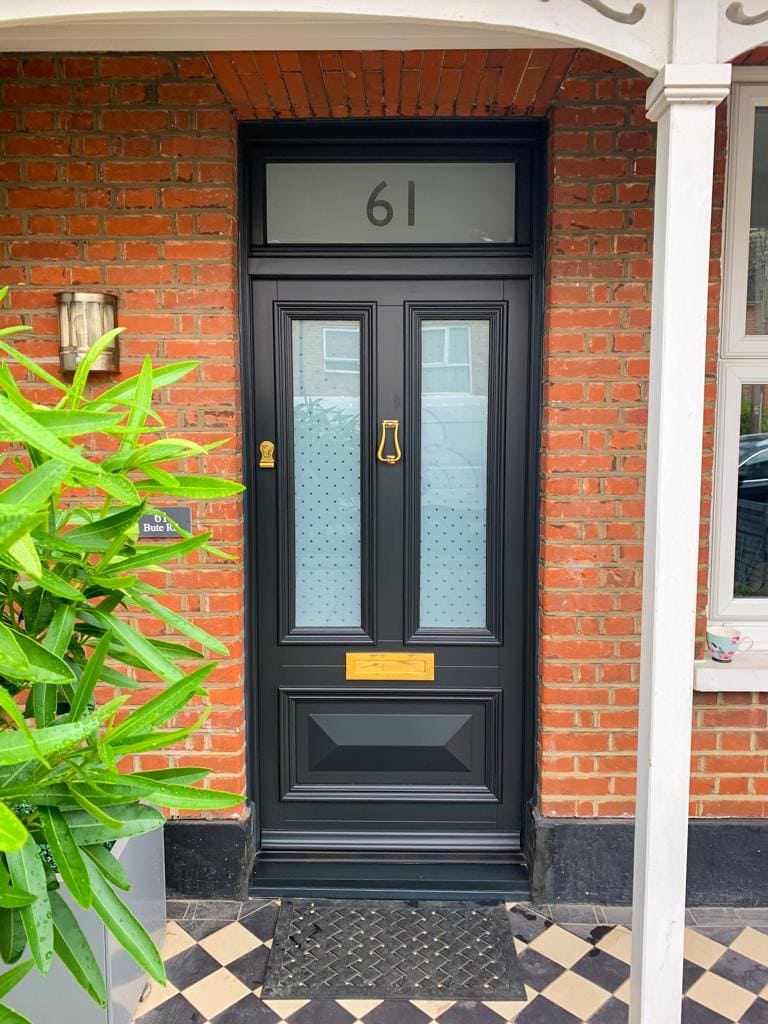
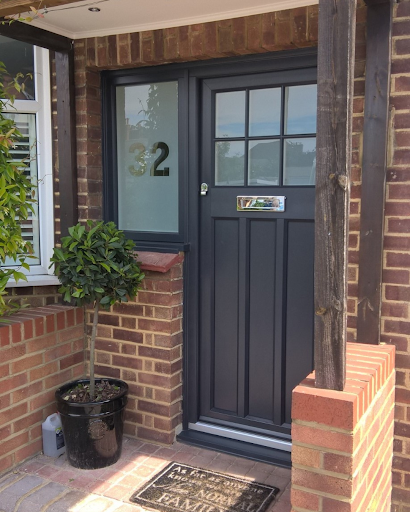
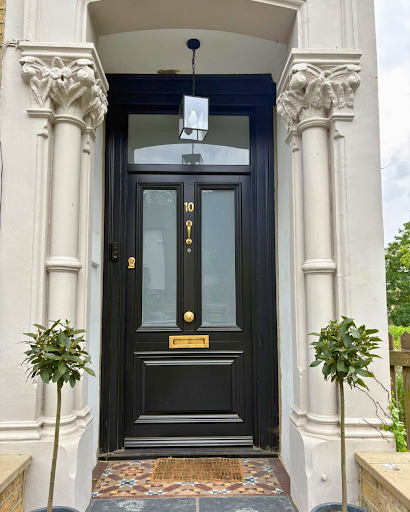
There is a reason black front doors remain popular. Black works with almost any type of brickwork and allows other features, such as stained glass, stone detailing or white window frames, to stand out.
For an Edwardian house, however, the design of the door is just as important as the colour. A very plain modern black door can look quite different from a traditional black door with fielded panels, decorative glass and period-style furniture.
If you like the simplicity of black but want something slightly softer, a very dark charcoal can be worth considering.
Matching your Edwardian front door to the brickwork
The colour of your house has a significant influence on which front door shades will work.
Red brick Edwardian homes
Red brick provides plenty of contrast and works well with:
- Deep green
- Navy blue
- Black
- Burgundy
- Dark red
- Natural timber tones
If the brick is particularly warm or orange, very cool colours can sometimes look harsh, so it’s worth comparing samples before making a decision.
London stock brick
The softer yellow and brown tones of London stock brick work particularly well with darker front door colours.
Black, deep green, navy and charcoal can all create a strong entrance without competing with the brickwork.
Brass hardware can also add warmth and tie the different colours together.
Painted or rendered Edwardian homes
If your home has painted render or a lighter façade, you have more flexibility.
A dark door can create a strong contrast, while a softer heritage shade can give the entrance a more relaxed appearance.
This is also where bolder colours can work particularly well. A deep teal, muted blue or rich red can become a feature without necessarily looking out of place.
How much glass should an Edwardian front door have?


This is partly a question of appearance and partly one of practicality.
If your hallway is dark, more glazing could make a noticeable difference. If privacy is more important, you may prefer a smaller glazed panel using textured or obscured glass.
Decorative glazing is particularly useful because it can do both jobs. It lets light through while preventing a clear view into the hallway.
You can also use the glass to pick up colours found elsewhere in the house. A small amount of coloured glass can complement a painted door without becoming the main feature.
For an Edwardian property, it’s worth looking at the door and glazing together. A traditional door with the wrong type of glass can feel surprisingly modern, while the right pattern can make a new door feel much more appropriate.
Don’t forget the door furniture
Hardware is one of those details that can easily be overlooked when choosing a new front door.
For an Edwardian home, traditional brass remains a strong choice. It works particularly well with dark green, navy and deep red doors, and can bring some warmth to the entrance.
Black furniture is another option and became increasingly popular around the turn of the century.
Consider the complete set rather than just the handle. Your:
- Door handle
- Letterplate
- Knocker
- House number
- Hinges
should all feel as though they belong together.
A traditional door can look very different depending on whether it is finished with polished brass, aged brass, black or chrome furniture.
Timber, composite or timber alternative?
Timber front doors


Timber remains a natural choice for an Edwardian property. It allows for traditional panel arrangements, decorative mouldings and a wide choice of paint colours and finishes.
It can also be particularly appealing if you’re trying to retain as much of the original character of the house as possible.
The main consideration is maintenance. Timber needs to be looked after, and the painted or stained finish will require attention over time.
Timber alternative front doors
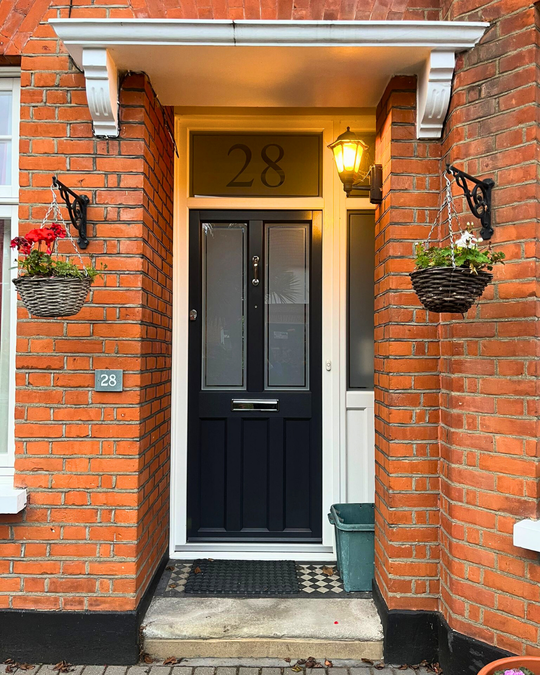
Timber alternative doors can offer a practical middle ground.
Evolution doors (English Door Company) are designed to replicate the appearance and detailing associated with traditional timber, while reducing the amount of ongoing maintenance required.
This can be particularly useful for period homeowners who like the appearance of timber but want a door that is easier to live with.
Composite front doors

Composite doors have also become much more varied in appearance. Traditional panel layouts, decorative glazing and a wide choice of colours mean a composite door doesn’t have to look particularly modern.
At Elwyns, composite front doors are available from suppliers including Fortrezz and Palladio, giving homeowners different styles and finishes to consider.
The right choice will depend on what matters most to you, whether that is authenticity, maintenance, security, performance or a combination of these.
Should your front door match your windows?
Your front door and windows don’t have to be identical, but they should work together.
This is particularly important on an Edwardian house where the entrance and windows are often quite visible from the street.
If you have traditional sash or casement windows, a front door with similarly considered proportions and detailing will usually look more natural than a completely contemporary design.
Colour is another way to connect the two. You could use the same shade throughout, or choose complementary colours instead.
For example, dark green windows with a slightly lighter green door can create a subtle contrast, while a navy front door can provide a focal point against neutral windows.
Consider conservation area requirements
Before replacing the front door of a period property, check whether there are any restrictions affecting your home.
This is particularly important for listed buildings and properties within conservation areas, where changes to the external appearance can be subject to additional controls.
The fact that a particular colour or door style is historically appropriate doesn’t automatically mean it will be permitted on every property.
If you’re unsure, check with your local authority before ordering a new door.
Finding the right Edwardian front door
The best Edwardian front door is one that feels connected to the architecture of the house without making it feel as though you’ve stepped back in time.
Traditional panelled doors, decorative glazing, deep greens, navy, burgundy and natural timber can all work beautifully, but there is plenty of room for personal preference.
The important thing is to consider the whole entrance. Look at the brickwork, windows, glazing, door furniture and surrounding details rather than choosing each element separately.
At Elwyns, we’ve been helping homeowners choose windows and doors for more than 60 years. We offer timber, timber alternative and composite front doors in a wide range of styles, colours, glazing and finishes.
If you’re replacing the front door of an Edwardian home, our showrooms in Carshalton, Dulwich and Woldingham are a useful place to compare different options in person. Seeing the colours, materials and glazing together can make it much easier to decide what works for your property.
A well-chosen front door can do more than improve the appearance of your home. It can bring out the architectural details that make an Edwardian property worth preserving in the first place.