
Choosing the right window style is one of the most important decisions a period homeowner will make. Windows do more than let in light, they set the rhythm and proportion of a façade, frame the character of a property, and often say more about a home’s age than almost any other feature. Get the style wrong, and even the best-quality double glazing can look out of place. Get it right, and you can dramatically improve comfort and efficiency while keeping a home looking exactly as it should.
Whether you’re restoring a Georgian townhouse, updating a Victorian terrace in Dulwich, or renovating a larger Edwardian or Arts and Crafts property in Surrey, the window style you choose needs to reflect the era the house belongs to. Below, we’ve put together a guide to the most common traditional window styles, what they suit, and the systems we install at Elwyns to help you achieve the right look.
Why window style matters more than material
It’s easy to assume that choosing a period-appropriate window is mostly about picking the right material, timber over PVC-U, for example. In reality, style and proportion matter just as much, if not more.
A window with the correct number of panes, the right glazing bar width, or an authentic horn detail will often look more convincing in the wrong material than a poorly proportioned window in the “correct” one. That’s why, before choosing a material or brand, it’s worth understanding which window style actually belongs on your property in the first place.
Vertical sliding sash windows
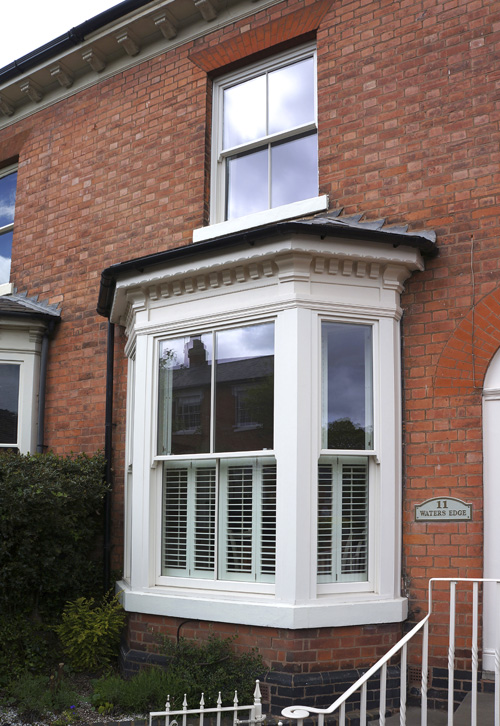
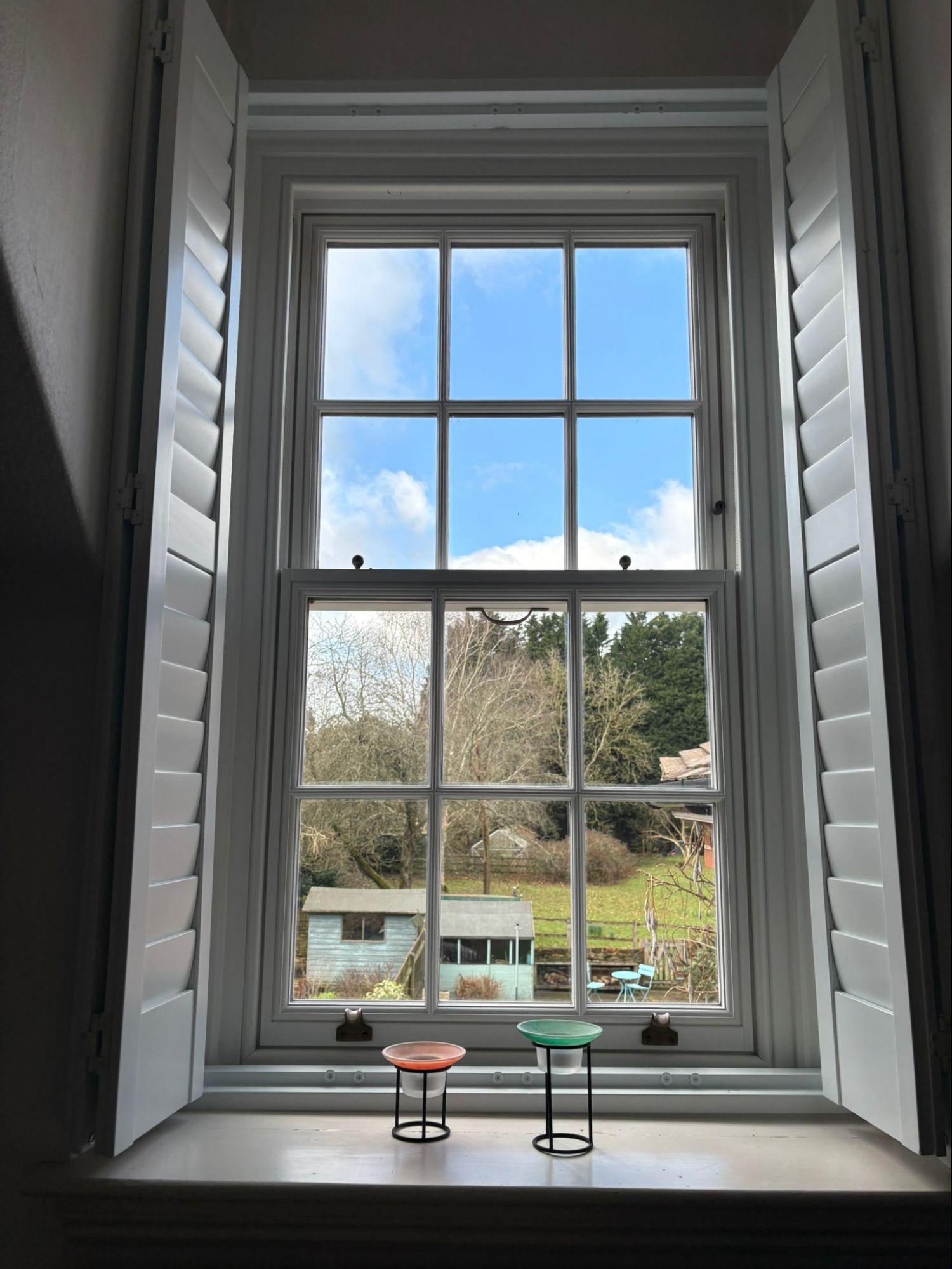
The sash window is arguably the defining feature of British period architecture, used from the late 1600s right through to the early 20th century. It consists of two vertically sliding panels, traditionally counterbalanced with weights and pulleys hidden inside the frame.
Sash windows suit an enormous range of properties, from Georgian townhouses to Victorian terraces and Edwardian villas, though the glazing pattern changes considerably across each period.
We offer sash windows in two operating systems. Traditional balanced weights replicate the original cord-and-pulley mechanism found in period homes, giving the most authentic feel and operation. Spring balanced systems use modern spring mechanisms instead of weights, offering smoother, lower-maintenance operation while keeping the same external appearance.
Both are available through our Timber Windows range, and as a Quickslide PVC-U sash for a lower-maintenance alternative, including a woodgrain effect finish that mimics painted timber.
Best for: Georgian, Victorian and Edwardian properties, particularly on street-facing elevations where authenticity matters most.
Georgian glazing bar patterns
Georgian sash windows (roughly 1714–1830) are defined by their multi-pane glazing, most commonly a six-over-six pattern, though eight-over-eight and twelve-over-twelve patterns appear on larger properties. The glazing bars themselves are typically thin and crisp, a reflection of the smaller panes of glass available at the time.
Symmetry is key to Georgian façades, so window proportions tend to be tall and evenly spaced, often decreasing slightly in height on upper floors.
Our Timber Windows range can be specified with authentic Georgian glazing bar patterns and slimline double glazing, preserving the delicate look of the original panes while improving thermal performance.
Best for: Georgian townhouses and terraces, and later properties built in a Georgian revival style.
Victorian sash windows
By the Victorian era (1837–1901), improvements in glass manufacturing allowed for larger panes, and the classic six-over-six pattern gave way to simpler two-over-two sashes, or in many cases a single large pane in the lower sash with margin lights around the upper one.
This period also introduced the horn, a small decorative extension at the base of the upper sash meeting rail, which became necessary once thicker glass required stronger horned joints. A window without horns on a Victorian property is one of the most common giveaways of an inauthentic replacement.
Coloured, etched or stained glass also became popular on Victorian entrance doors and hallway windows, adding a distinctive decorative touch.
Our Timber Windows range replicates horned joints and traditional Victorian glazing patterns closely, while Evolution timber-alternative windows offer the same detailing with lower long-term maintenance, a popular choice for larger Victorian terraces and semis with multiple windows to maintain.
Best for: Victorian terraces and semi-detached homes, particularly in South London’s many Victorian suburbs.
Edwardian windows
Edwardian properties (1901–1910) moved slightly away from strict Victorian symmetry, often featuring wider window openings and a fondness for small-paned upper sashes sitting above larger, single-pane lower sashes. Leaded lights and stained glass were used more decoratively, particularly in bay windows and porches.
Edwardian homes also tend to have slightly wider frame sections than their Victorian predecessors, so it’s worth choosing a system that can replicate this without appearing bulky.
Both our Timber Windows and Evolution ranges can be specified to match Edwardian proportions, including the small-paned upper sash detailing that defines the period.
Best for: Edwardian villas and semis, particularly those with bay window features.
Bay windows
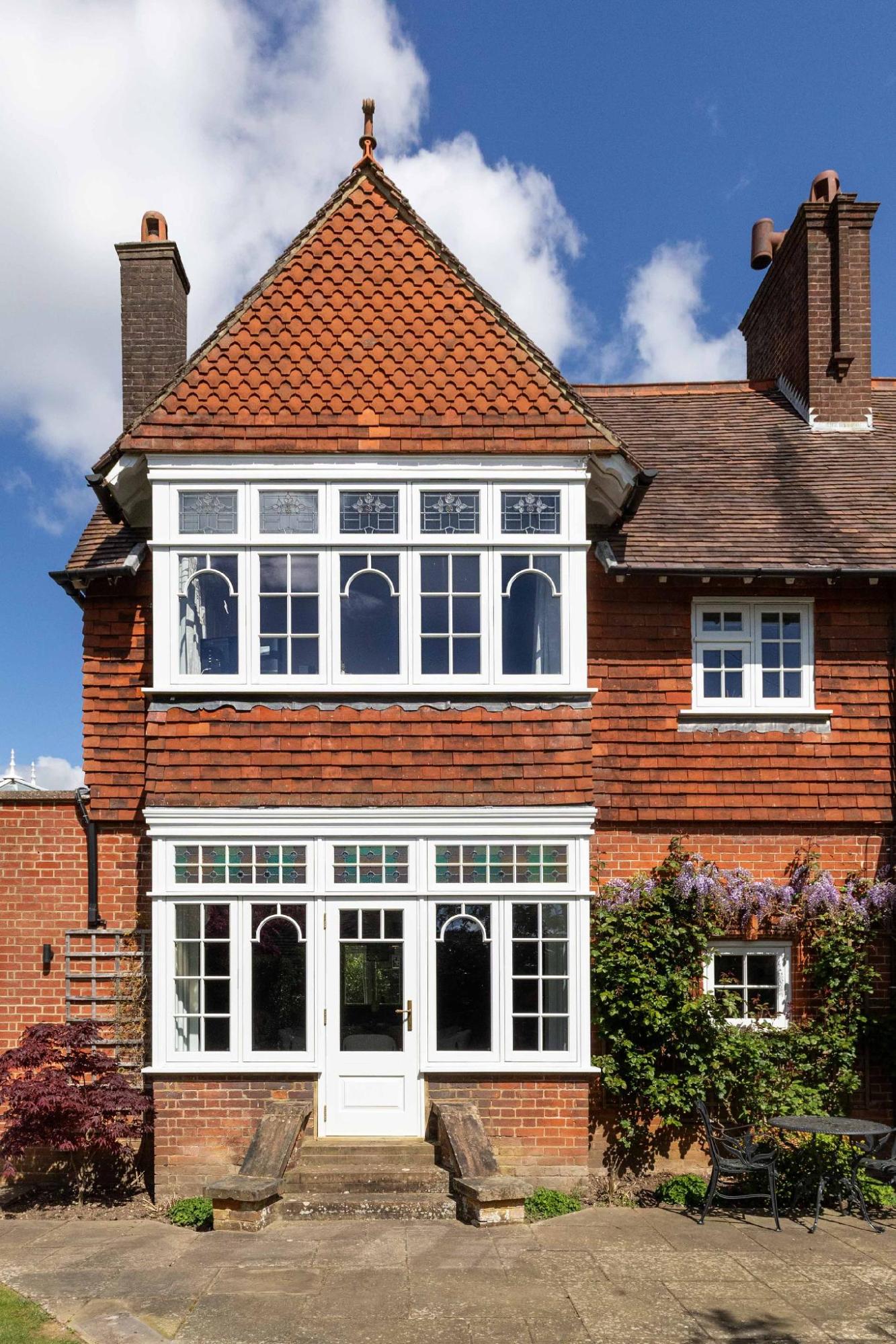
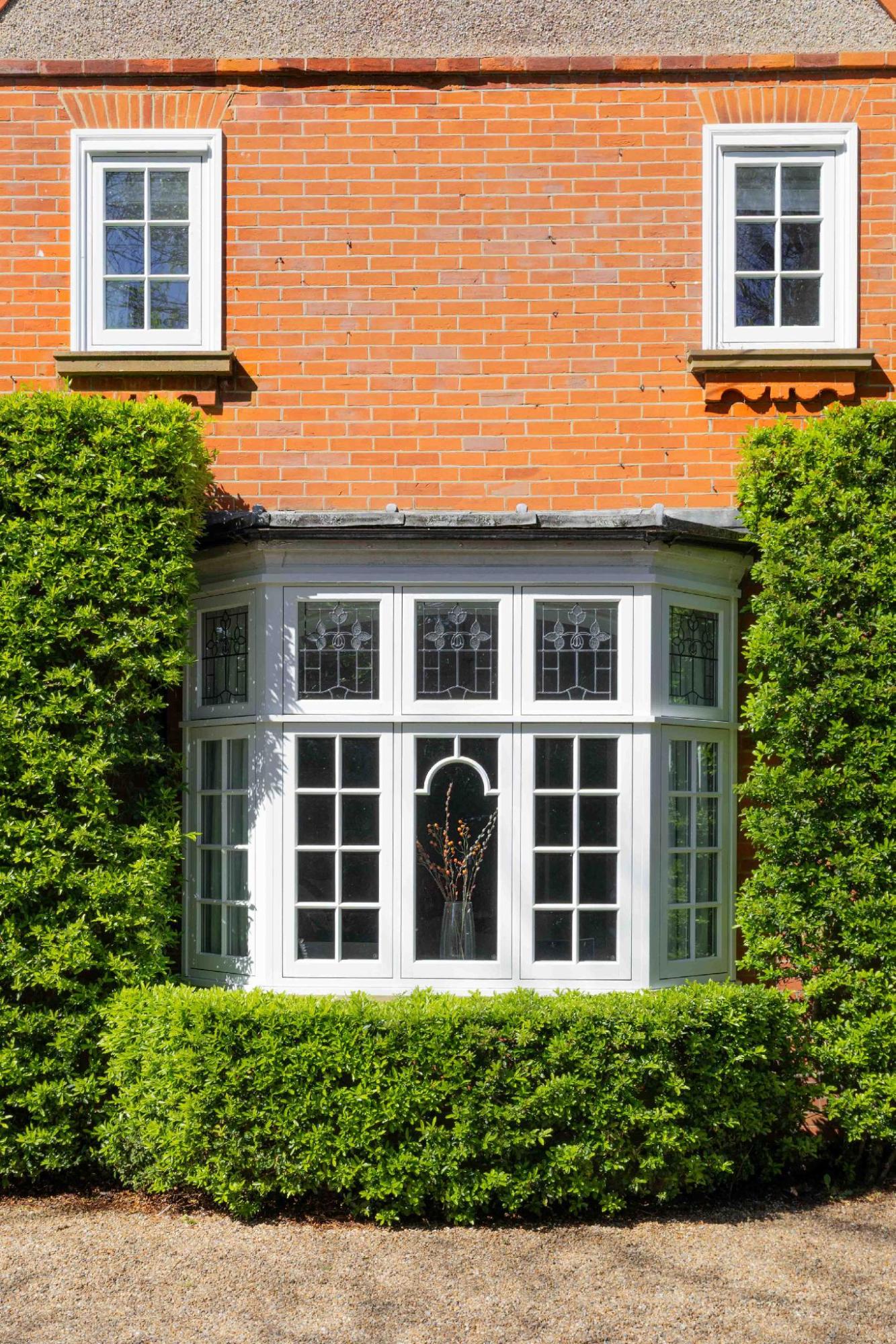
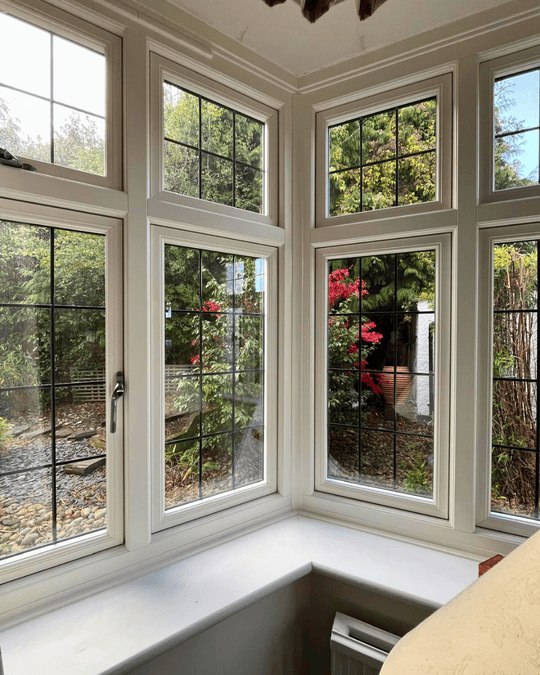
Bay windows became especially popular from the Victorian period onwards and remain one of the most recognisable features of British suburban architecture. Square, canted (angled) and curved bays each became fashionable at different points, with canted bays being particularly common on Victorian and Edwardian terraces.
Because a bay window combines several window units at different angles, getting consistent glazing bar alignment and colour matching across the whole bay is important for a cohesive look.
Bay windows can be specified across our Timber Windows, Evolution, Whiteline and Quickslide ranges, allowing homeowners to match whichever style and material suits the rest of the property.
Best for: Victorian and Edwardian terraces and semis with existing bay window openings.
Casement windows
While sash windows dominate much of Britain’s period housing stock, casement windows, hinged at the side and opening outward. These were also common, particularly on cottages, Arts and Crafts properties, and rural period homes.
Traditional casements are typically taller and narrower than modern equivalents, often divided into smaller panes by glazing bars, and finished with traditional stays and casement fasteners rather than modern espagnolette handles.
Our Timber Windows range offers traditional casement styles with authentic ironmongery, while Whiteline provides a PVC-U casement option with foiled woodgrain finishes and heritage colours for homeowners wanting a lower-maintenance alternative.
Best for: Arts and Crafts homes, cottages, and rural or village period properties.
Crittall-style steel windows
Popular through the 1920s and 30s, slim steel-framed windows became a hallmark of Art Deco and later Edwardian properties, prized for their narrow sightlines and industrial, geometric character. Original crittall windows are notoriously poor performers thermally and are prone to rust, making replacement a common priority for owners of these properties.
We install Aluco, our dedicated steel-look aluminium collection, specifically to replicate the narrow, elegant profiles of original crittall windows while delivering vastly improved thermal performance and none of the maintenance headaches of steel.
Best for: Art Deco and 1920s–30s properties, and any period home originally fitted with crittall-style windows.
Window shutters
While not a window style in themselves, shutters are worth mentioning as they were a common feature on Georgian and Victorian properties, both externally and internally, used for security, insulation and light control before curtains became widespread.
Interior panelled shutters remain popular on period homes today, adding authenticity and a useful layer of insulation and privacy, and can be fitted alongside any of the window styles above.
Best for: Georgian and Victorian properties wanting to reinstate an authentic period feature.
Matching window style to render, brick and stone
Beyond the window itself, it’s worth considering how your chosen style will sit against the existing façade.
Exposed red or London stock brick tends to suit slim glazing bars and traditional horned sashes, where the contrast between brick and painted timber does much of the visual work.
Painted or rendered properties offer more flexibility, often suiting bolder colours or a wider range of styles, from Georgian multi-pane sashes to simpler Edwardian casements.
Stone-fronted properties, more common in the South East on larger period homes, often suit taller, more formal sash proportions with minimal glazing bar detail.
Conservation areas and listed buildings
Many period homes with traditional window styles sit within conservation areas, and some are listed. As with front doors, replacing windows on a like-for-like basis is usually considered permitted development in a conservation area, but the local authority will often expect the replacement to match the style, proportions and materials of the original as closely as possible.
On listed buildings, replacing original windows typically requires listed building consent, which isn’t always granted even for high-quality timber replacements. In these situations, slimline double glazing or secondary glazing fitted within the existing frame are often the only realistic options a conservation officer will accept.
It’s always worth checking with your local planning department, or discussing your specific property with your installer, before finalising a specification.
Choosing the right window style for your home
The best window style for a traditional home isn’t necessarily the most decorative or the most expensive, it’s the one that reflects the age and character of the property accurately, whether that’s a Georgian six-over-six sash, a horned Victorian two-over-two, or a crittall-style steel window on an Art Deco villa.
At Elwyns, we work with homeowners across South London and Surrey to identify the right style for their property before discussing material and brand. Whether that’s Timber Windows or Evolution for the most authentic period detailing, Whiteline or Quickslide for a lower-maintenance PVC-U alternative, or Sheerline, Air and Aluco for aluminium and steel-look solutions, our team can help you find a window that looks right for the age of your home and performs well for decades to come.
Contact us today to arrange a free quote.