
The 1930s semi is one of Britain’s most recognisable house styles. Red or brown brickwork, a bay window at the front, a small porch and a front garden are familiar features on streets across the country. Although many homes share a similar layout, the right front door can give each property its own character.
Choosing a new front door colour is a chance to refresh the entrance without changing the features that make the house feel familiar. Some homeowners prefer to keep things traditional with a deep green or classic red, while others use navy blue, muted grey or a more unusual shade to bring a little personality to the frontage.
The challenge is finding a colour that works with the brickwork, window frames and roof tiles, while still feeling right for the age of the property.
If you are looking for the best front door colours for a 1930s semi-detached home, there are plenty of options to consider. From heritage shades to more contemporary choices, here is how to find a colour that suits your home.
What makes a good front door colour for a 1930s house?
Unlike some Victorian properties, which can feature elaborate door surrounds, decorative stained glass and ornate brickwork, many 1930s semis have simpler entrances. The front door may sit beneath a small tiled porch or within a recessed entrance, with a bay window taking up much of the front elevation.
This means colour can play an important role in making the entrance stand out.
A dark, rich shade creates a strong focal point against red brick. A lighter colour can soften the frontage, while a muted green or blue offers something distinctive without looking too modern.
Before choosing a colour, look at three things:
- The brickwork: Red brick, brown brick and lighter stock brick can all work with different shades.
- The windows: Consider whether your windows are white, cream, grey or another colour, and whether you want the door to match or contrast.
- The overall frontage: Roof tiles, the porch, paths and garden planting all affect how the colour looks in context.
It is also worth considering the style of door itself. A simple panelled design may suit a traditional 1930s house better than a heavily ornate door, while glazed panels can help bring light into a darker entrance.
1. Dark green: a classic choice for a 1930s semi
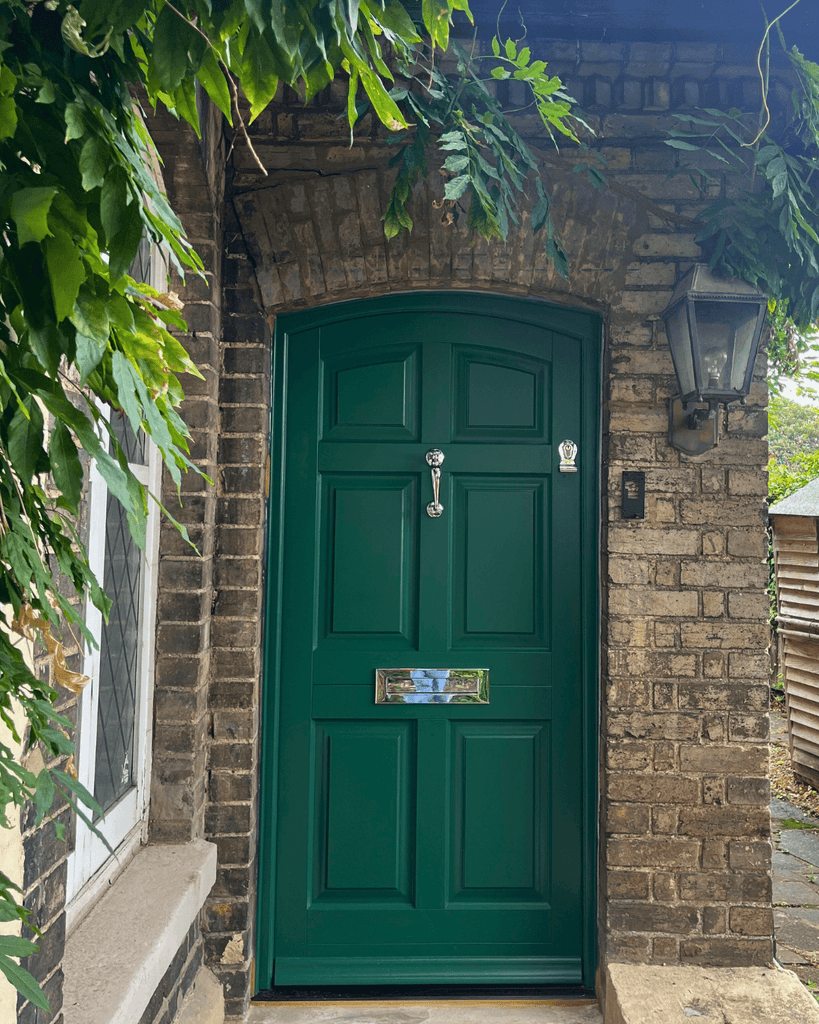
Dark green is one of the strongest choices for a traditional front door. It has a heritage feel, works well with red and brown brick, and adds colour without becoming too dominant.
Deep greens can make a particularly good match for 1930s homes with white window frames and a tiled porch. The contrast gives the entrance definition, while the natural undertones sit comfortably alongside brickwork and garden greenery.
There are several directions you can take this colour.
- Farrow & Ball Studio Green: A very deep green that can appear almost black in certain light.
- Farrow & Ball Duck Green: A richer, more recognisably green shade with a traditional feel.
- RAL 6005 Moss Green: A deep, understated green that works well with red brick.
- RAL 6009 Fir Green: A darker, more dramatic option.
For a semi-detached house, dark green is a good choice if you want to update the entrance while keeping the overall look in keeping with the property’s age.
Brass or polished gold-coloured door furniture can bring warmth to the finish, while black hardware creates a more understated appearance.
2. Navy blue: traditional with a little more colour
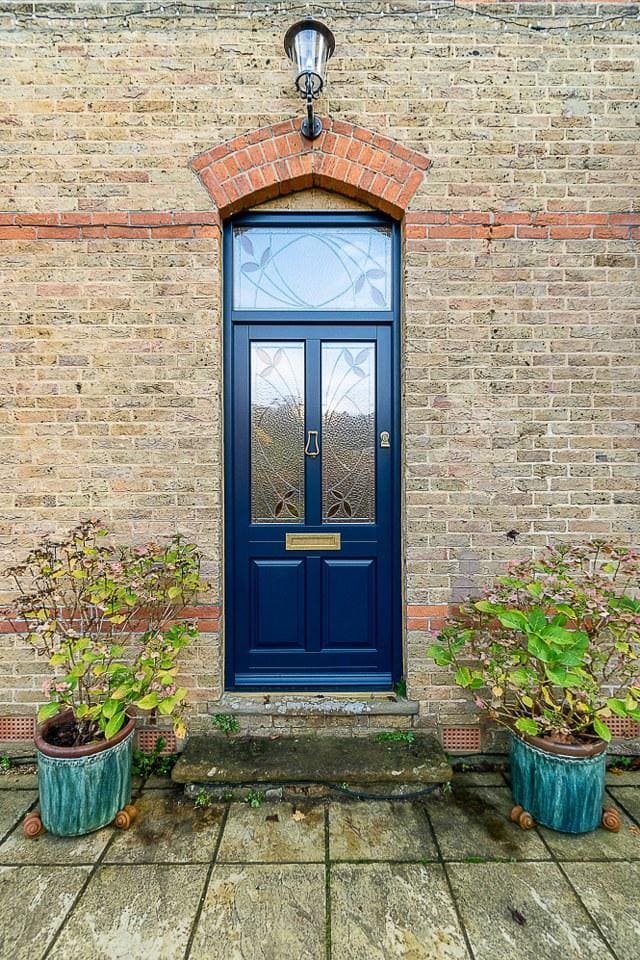
Navy blue is a versatile option for homeowners who want something more colourful than black or grey without moving too far from a traditional look.
Against red brick, a deep blue creates a crisp contrast. It also works well with cream brickwork, white window frames and pale render.
The shade you choose makes a difference. A very dark navy can look almost black from the street, whereas a slightly brighter blue will be more noticeable.
Consider:
- Farrow & Ball Hague Blue: A deep blue with green undertones.
- Farrow & Ball Stiffkey Blue: A stronger, more recognisable navy.
- RAL 5003 Sapphire Blue: A deep blue that gives the entrance a smart, traditional appearance.
- RAL 5011 Steel Blue: A dark, subdued blue with a slightly cooler feel.
Navy is particularly effective if the rest of the frontage is relatively neutral. It gives the door enough presence to stand out without competing with the bay window or other architectural details.
For a classic finish, pair it with brass furniture and a simple door knocker. For something more contemporary, black hardware and clean-lined lighting can work equally well.
3. Black: timeless and understated
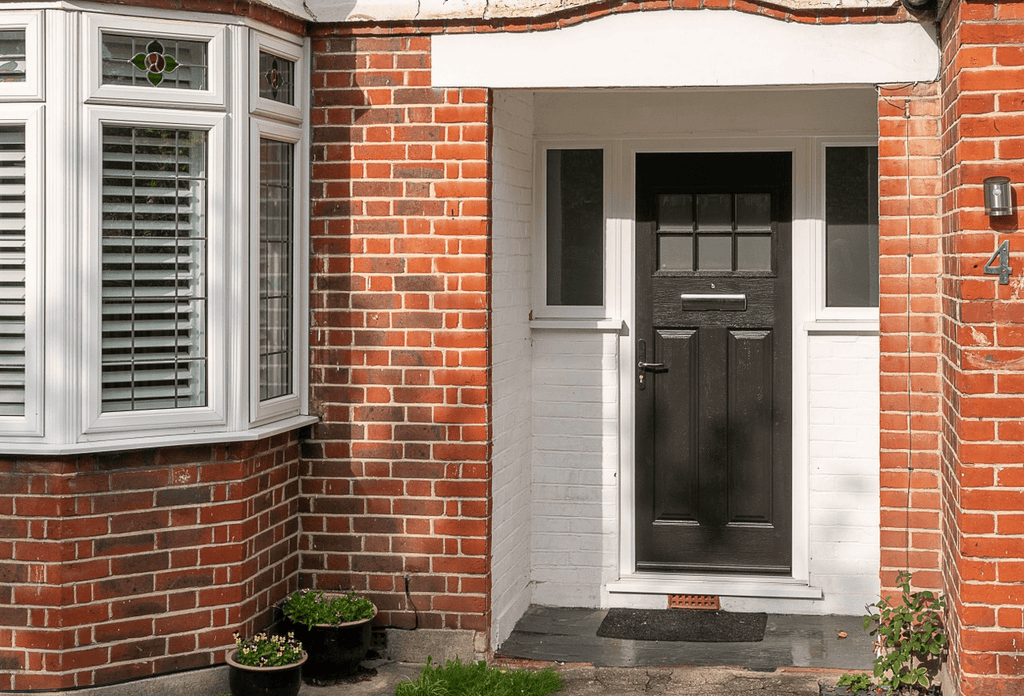
Black remains a popular front door colour because it works with so many different styles of property.
On a 1930s semi, a black door can sharpen the appearance of the entrance, particularly where the house has red brickwork, white windows and a pale porch surround. It creates a strong contrast without introducing another colour into the overall scheme.
There is a difference between a true black and a softer charcoal, however.
- RAL 9005 Jet Black: A deep, clean black.
- Farrow & Ball Railings: A dark shade that reads as charcoal with blue undertones.
- Farrow & Ball Off-Black: A softer alternative to a pure black.
A black front door is a particularly safe option if you are planning to sell the property in the future or simply want a finish that will not quickly feel dated.
To stop the entrance looking too stark, consider adding warmth through the hardware, porch lighting or a pair of planters. Brass details can soften the contrast, while stainless steel offers a cleaner, more modern finish.
4. Burgundy and deep red: a warmer alternative
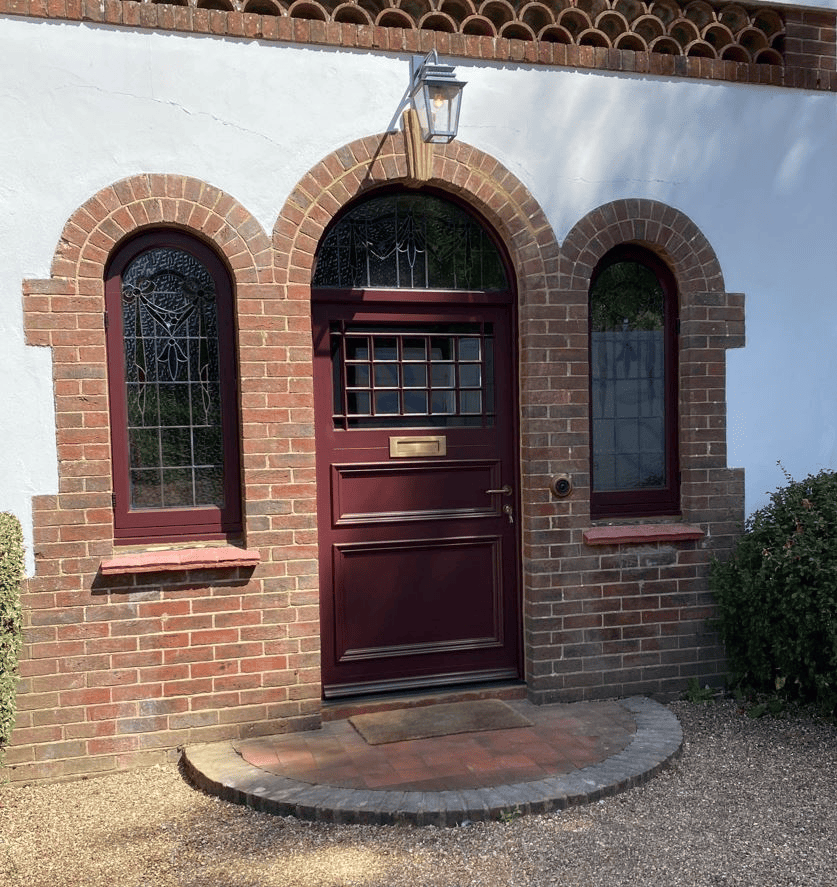
A deep red or burgundy front door can complement the warm tones of a 1930s house particularly well.
Rather than choosing a bright primary red, look at shades with brown, plum or wine undertones. These feel richer and are often easier to coordinate with traditional brickwork.
The right red can make an entrance feel welcoming without being overly bold.
Some options to consider include:
- RAL 3004 Purple Red: A dark red with a subtle purple undertone.
- RAL 3005 Wine Red: A deep, muted burgundy.
- Farrow & Ball Eating Room Red: A rich red with depth and warmth.
Burgundy works especially well with brown brick, cream detailing and traditional roof tiles. On red brick, it can also look effective if the door is dark enough to provide contrast rather than blending into the wall.
If you choose this colour, keep the surrounding details relatively simple. White or cream window frames, dark hardware and restrained planting can help the door become the main feature.
5. Sage green: softer and more contemporary
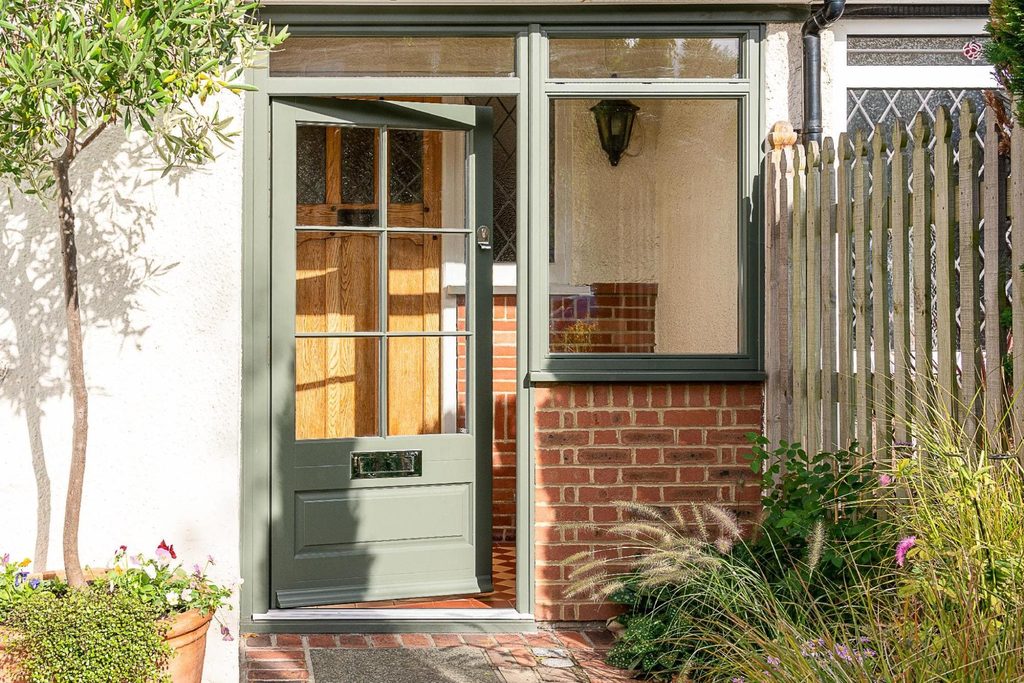
Not every front door needs to be dark. Sage green is a softer option that brings colour to a traditional house without making the entrance feel too formal.
Its muted, grey-green tones work well with natural materials, including brick, stone, timber and terracotta. It can also sit comfortably alongside white window frames and a simple tiled porch.
Sage is particularly worth considering if you want to update the property without making the door the most prominent feature on the street.
The main thing is to choose a shade with enough depth to stand apart from the surrounding brickwork. Very pale greens can lose their definition against lighter walls, while a slightly darker sage tends to hold its colour more effectively.
For a coordinated finish, pair sage with black or brushed brass hardware and keep the rest of the entrance relatively neutral.
6. Anthracite grey: a modern update
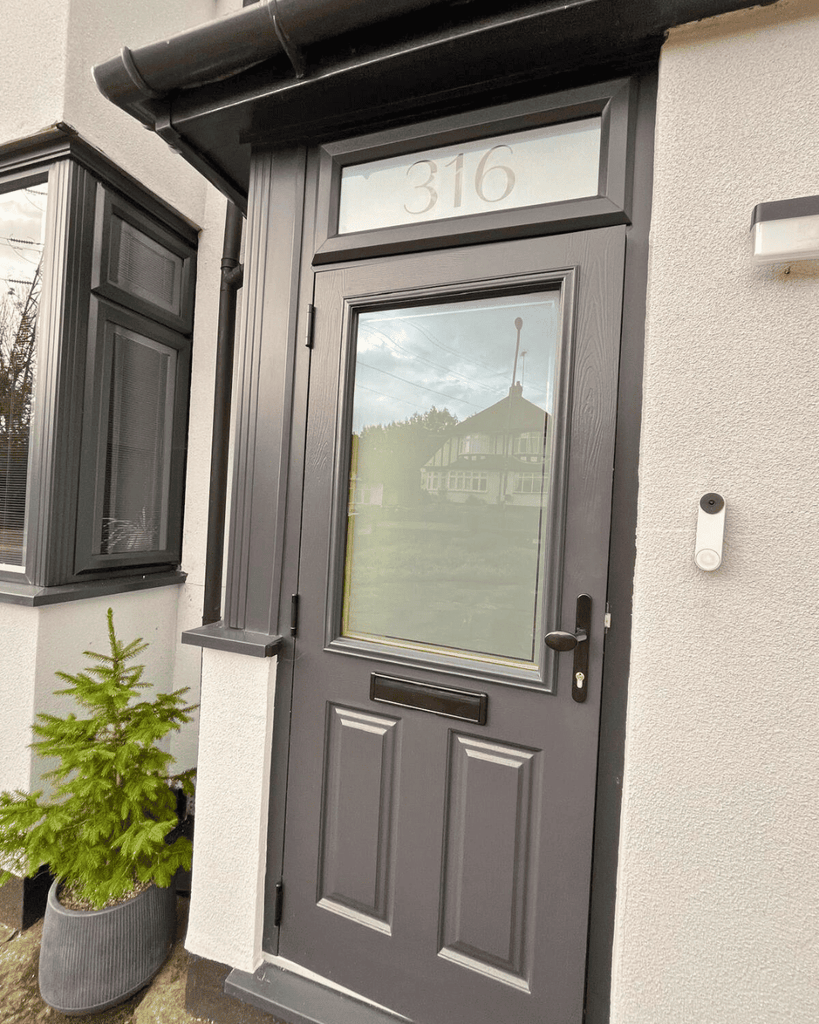
Grey has become a popular choice for replacement windows and doors, and anthracite is a strong option for homeowners who want a more contemporary finish.
On a 1930s semi, dark grey can work particularly well with white windows, red brick and simple entrance details. It has the contrast of black but can look slightly softer, depending on the shade and finish.
Consider RAL 7016 Anthracite Grey for a deep, modern appearance, or look at a lighter charcoal if you want less contrast.
Grey is also useful if you have other dark details on the house, such as roof tiles, gutters or external lighting. Repeating the same colour in a few carefully chosen places can help the frontage feel considered.
One thing to bear in mind is that grey can look quite cool against orange-red brick. If your house has particularly warm brickwork, compare samples in natural daylight before committing.
7. Cream and off-white: a lighter, traditional look
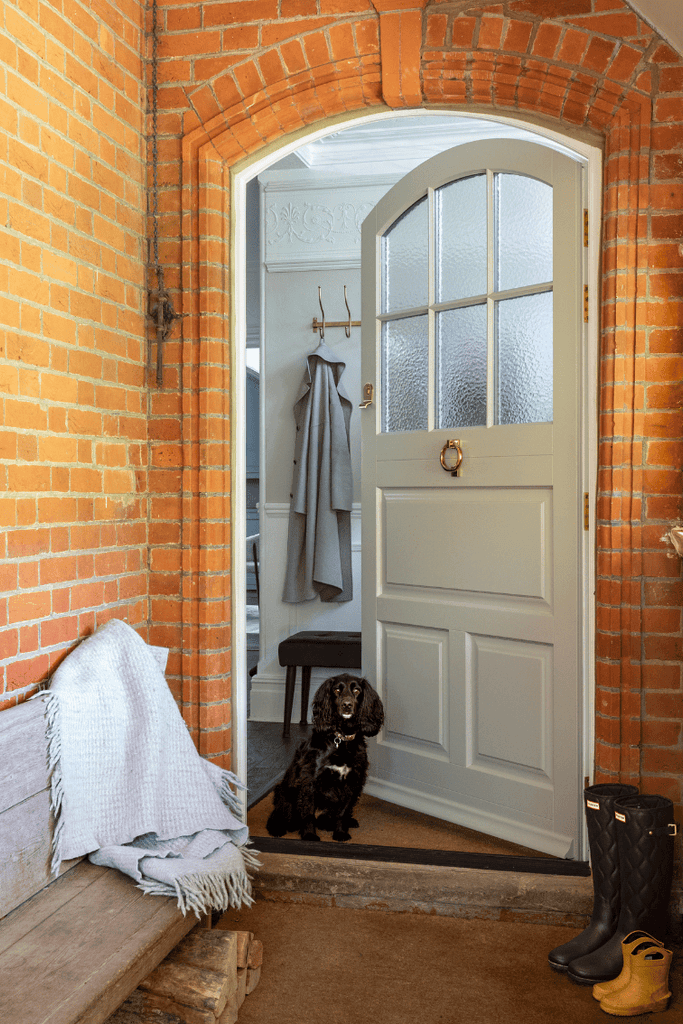
Cream and off-white doors are worth considering if you prefer a lighter entrance.
They can be especially effective on homes with brown brick, pale render or cream detailing. Rather than creating a strong contrast, a light door blends into the surrounding architecture and gives the frontage a softer appearance.
Cream can also work well if you want to move away from brilliant white, which can sometimes look stark against older brickwork.
A warm off-white is generally easier to coordinate with traditional materials than a very cool white. Look at the colour of your window frames and porch before deciding whether to match them exactly or choose a slightly warmer shade.
This approach is particularly suitable if the house already has a relatively understated exterior and you want the front garden, brickwork or entrance glazing to provide the main visual interest.
How to choose a front door colour for red brick
Red brick is common on 1930s semi-detached houses, but its colour can vary considerably. Some bricks are orange-red, others are darker and browner, and many have a mixture of tones.
The best front door colour will depend on the particular brickwork rather than the age of the house alone.
For warmer red brick, deep green, navy and charcoal provide contrast. Burgundy can also work well, although it is worth checking that the door does not disappear into the brickwork.
For darker brown brick, consider deep green, cream, black or a rich blue. These shades can pick up the natural tones in the brick without making the entrance feel too busy.
If the house has painted brickwork or render around the door, you have more flexibility. A bolder colour can stand out against a neutral background, while a muted shade can keep the entrance looking understated.
Should your front door match your windows?
Matching the front door to the windows is not essential. In fact, a little contrast can make a traditional house look more interesting.
If you have white windows, almost any of the colours above can work, from black and navy to sage green or burgundy.
If your windows are grey, a dark green or deep blue can add warmth and prevent the frontage from looking too uniform. Cream windows tend to work particularly well with heritage colours and softer neutrals.
If you are replacing both the windows and front door, it is worth considering the colours together before ordering. They do not need to match, but they should look as though they belong to the same house.
You should also think about the porch, roof tiles and any existing decorative details. The front door is only one part of the overall exterior.
What style of front door suits a 1930s semi?
Colour is important, but the design of the door matters just as much.
Many 1930s homes have relatively simple entrances, so a traditional panelled door or a design with glazed sections can work particularly well. Decorative glass can introduce character and allow natural light into the hallway, especially where the entrance is recessed.
If you prefer a more contemporary appearance, a clean-lined door in a heritage colour can update the frontage without making the house feel out of place.
Material is another consideration. Timber offers a traditional look and can be painted in a wide range of colours. Modern timber alternative and composite doors provide other options, with different maintenance requirements, finishes and design choices.
Before choosing, consider the proportions of the entrance, the amount of light you want and whether the new door should closely replicate the existing design or introduce a more noticeable change.
Finding the right front door colour for your 1930s home
A 1930s semi-detached house gives you plenty of scope to experiment with colour. Deep green, navy, black and burgundy are strong choices if you want a traditional entrance with definition, while sage green, anthracite grey and cream offer different ways to refresh the frontage.
Start with the brickwork, window frames and porch, then think about how much contrast you want. A colour that looks striking on a sample card can look quite different on a full-size door, particularly in a recessed entrance or a shaded porch.
If possible, view colour samples outside and at different times of day before making your decision.
At Elwyns, we have been helping homeowners choose windows and doors for over 60 years. Our range includes traditional and contemporary front door styles in a variety of colours, materials and finishes, so you can find an option that suits both your property and your preferences.
The best front door colour is one that complements the house while giving the entrance a character of its own.