Author Archive

Casement Windows: What You Need to Know Before Choosing Yours

Monday, August 24th, 2026

Casement windows are one of the most familiar styles of window in the UK. You’ll find them on all sorts of properties, from Victorian terraces and Edwardian houses to newer family homes and contemporary extensions.

They are also one of the most versatile. Casement windows can be made in timber, uPVC, aluminium and timber alternative materials, with different profiles, colours, glazing and hardware available to suit the property.

If you’re looking at replacing your windows, it’s worth spending some time considering the style as well as the material. A window that looks right on a modern extension may not be the best choice for a Victorian terrace, even if the two products have similar performance figures.

With over 60 years of experience, we’ve worked on a wide range of homes across Surrey and South London. Here’s what to look for when choosing casement windows.

What are casement windows?

A casement window has an opening section that is attached to the frame with hinges. Most open outwards from the side, although different configurations are available.

They can be used as individual windows or combined with fixed panes to create larger openings. This makes them suitable for everything from smaller bedrooms and bathrooms to larger living spaces.

Casement windows are popular partly because they are straightforward. There’s no complicated mechanism, and modern designs offer good security, ventilation and thermal performance.

They also leave plenty of scope for getting the appearance right.

Choosing the right style

The term ‘casement window’ covers quite a broad range of designs.

A standard casement has an opening section that sits slightly proud of the frame when closed. A flush casement has a flatter profile, with the opening section sitting level with the frame.

Flush casements are often chosen for traditional properties because of their simpler appearance, but they aren’t the only option for a period home.

The proportions of the window, the number of panes, glazing bars, colour and hardware can all make a difference. It’s worth looking at the window as part of the whole house rather than choosing a style in isolation.

uPVC casement windows

uPVC remains a popular material for replacement windows, and modern systems are a long way from some of the bulkier designs seen in the past.

Today’s uPVC windows are available in a good range of colours and finishes, with profiles that can work on both traditional and contemporary homes.

They’re also relatively easy to look after. There’s no regular painting required, and the frames can generally be kept clean with little more than a cloth and soapy water.

At Elwyns, our uPVC windows come from Whiteline and Everglade.

For homeowners replacing a number of windows, uPVC can offer a sensible balance between cost, performance and maintenance.

Timber casement windows

If you’re working on a period property, timber is often worth considering.

There’s a warmth to natural timber that can be difficult to reproduce with another material. It also allows for traditional proportions and details, which can be particularly important when replacing older windows.

Our timber windows are supplied by Timber Windows.

Timber does need more care than uPVC or aluminium. Depending on the finish and exposure, it will need to be maintained and redecorated over time. For some homeowners, that’s a worthwhile trade-off for the appearance and character that timber provides.

It’s also worth considering the existing windows. If the house has traditionally detailed timber casements, replacing them with something that looks noticeably different can have a bigger impact on the appearance of the property than you might expect.

Aluminium casement windows

Aluminium is a good option if you’re looking for slimmer frames and more glass.

Its strength means that frames can be made relatively narrow without compromising their ability to support larger panes. This makes aluminium particularly popular for contemporary homes, extensions and rooms where making the most of natural light is important.

Modern aluminium windows are also thermally broken, so the performance is very different from older aluminium windows that you may remember from decades ago.

We offer aluminium windows from Sheerline and Aluco.

Aluminium doesn’t have to mean a stark, ultra-modern appearance either. The right colour and configuration can work well alongside a wide range of architectural styles.

Timber alternative casement windows

If you like the appearance of timber but don’t want quite as much maintenance, timber alternative windows are another option.

Our timber alternative windows come from Evolution, which offers designs based on traditional timber windows.

The range includes flush and lipped casements. A lipped casement has a more defined profile around the opening section, while a flush casement has a flatter appearance.

This can be useful when replacing windows on a period or character property. You can choose a profile that reflects the style of the existing windows while benefiting from a modern, lower-maintenance material.

For homeowners who want the look of painted timber without having to repaint the windows as regularly, it’s an option worth looking at.

Are casement windows energy efficient?

Modern casement windows can be very energy efficient, but the material isn’t the only thing that matters.

The glass, frame, seals and installation all contribute to the finished performance.

If you’re replacing older windows, particularly single glazing or older double glazing, the difference can be noticeable. Newer glazing is designed to reduce heat loss and modern frames provide a much better seal around the opening.

It’s also worth remembering that installation matters. A good window won’t perform properly if it hasn’t been fitted correctly.

When we’re looking at a replacement window project, we consider the product and the property together rather than simply recommending the same specification for every house.

What about security?

Security is another reason homeowners choose to replace older windows.

Modern casement windows can be fitted with more advanced locking systems and stronger glazing than many older windows. The frame, hardware and installation all contribute to the overall security of the finished window.

It’s worth discussing the options with your installer, particularly for easily accessible ground-floor windows.

Are casement windows suitable for period homes?

They certainly can be.

Casement windows are found on many Victorian and Edwardian properties, so replacing them with a well-designed casement doesn’t necessarily mean losing the character of the house.

The detail is what matters.

A Victorian terrace might benefit from traditional proportions and glazing bars, while a more modern property could suit larger panes and slimmer frames.

The colour is important too. White isn’t the only option, and a carefully chosen heritage shade can make a replacement window feel much more settled within the existing architecture.

If your property is listed or in a conservation area, check whether there are any restrictions before replacing the windows. The requirements can vary from one property to another.

How much do casement windows cost?

There’s no useful one-size-fits-all price for replacement casement windows.

The cost will depend on the number of windows, their size and configuration, the material, glazing, colour, hardware and installation.

uPVC is generally the more affordable option, while timber and aluminium tend to sit at a higher price point. Timber alternative windows offer another option between the two, depending on the specification.

When comparing quotations, make sure you’re comparing the same things. Two windows can look similar on paper but have very different glazing, hardware, profiles or installation specifications.

The cheapest quotation isn’t always the cheapest option in the long run.

What should you consider before replacing your windows?

Start with the house.

Look at the windows you already have and consider what works about them. Are the proportions right? Do you want to keep the same appearance? Are you looking for something more modern?

Then think about how you use the rooms. You may want more natural light in a kitchen or living room, while ventilation and privacy might be more important upstairs.

Maintenance is another consideration. Timber needs more ongoing care than uPVC, while aluminium offers a durable finish with relatively little maintenance.

And, of course, there’s the budget.

A good window company should be able to talk you through the options rather than simply showing you the most expensive product.

Why choose Elwyns?

Elwyns has been established since 1963, so we’ve been installing windows and doors for more than 60 years.

During that time, we’ve worked on all sorts of properties, and we’ve learnt that there isn’t one window that’s right for everyone.

Some homes need the character of timber. Others are better suited to low-maintenance uPVC. An extension might call for aluminium, while a period property could benefit from a timber alternative with traditional detailing.

We work with a selection of established manufacturers, including Timber Windows, Whiteline, Everglade, Sheerline, Aluco and Evolution, so we can look at the project as a whole before recommending a product.

We also understand that replacing your windows isn’t something you do very often. It’s a significant investment, which is why we aim to make the process straightforward and give you advice that makes sense for your home.

And because we’ve been around for over six decades, we’re still here if you need us after the installation. Our guarantees and aftercare are part of that commitment.

See our casement windows in person

Choosing new windows from a photograph isn’t always easy.

If you’re considering casement windows, you’re welcome to visit one of our showrooms in Carshalton, Dulwich or Woldingham. You can see different materials, profiles, colours, glazing and hardware and talk through your options with our team.

Whether you’re replacing one window or planning a larger project, we’ll help you find an option that works for your property.

Get in touch with Elwyns or visit one of our showrooms to discuss your new windows.
Timber Alternative Windows in Carshalton: Are They Right for Your Home?

Monday, August 24th, 2026

Replacing your windows is one of those jobs where the practical decisions and the appearance of your home tend to go hand in hand.

You might want warmer rooms, better security and windows that are easier to maintain, but that doesn’t mean you want to lose the character of your house in the process. This is particularly true in Carshalton, where there are plenty of Victorian and Edwardian homes alongside 1930s properties and more contemporary houses.

For many period properties, timber has traditionally been the natural choice. It looks right, can be made with traditional details and has a character that is difficult to reproduce.

Timber alternative windows have come a long way in recent years. Modern designs can replicate many of the details associated with traditional timber windows while offering the lower maintenance and modern performance that homeowners often want.

At Elwyns, we supply Evolution timber alternative windows, alongside genuine timber, uPVC and aluminium. So, if you’re considering new windows for your Carshalton home, how do you know whether timber alternative is the right choice?

What are timber alternative windows?

Timber alternative windows are made from modern materials rather than natural wood, but are designed to recreate the appearance of traditional timber windows. A convincing timber alternative isn’t simply a modern window with a wood-effect finish.

The profile of the opening sash, the proportions of the frame, the joints, cill and glazing all contribute to how the finished window looks.

Evolution has focused heavily on these details. Its two main window ranges are Storm and Evolution Flush. Storm is based on the appearance of traditional stormproof timber casements, while Evolution Flush is designed to replicate the flatter appearance of traditional flush-fitting timber windows. Both are available with timber-style joints.

That gives homeowners more choice when replacing existing windows, particularly if the original windows have a distinctive traditional appearance.

Why consider timber alternative windows in Carshalton?

The style of a replacement window can have a surprisingly large effect on the appearance of a house.

On a period property, the windows aren’t just functional. Their proportions and detailing form part of the architecture.

If you have a Victorian or Edwardian home with traditional casement windows, for example, replacing them with a modern-looking window may make the house feel very different. It doesn’t necessarily mean the replacement is a bad window, but it may not be the right window for that particular property.

Timber alternative windows offer another route.

You can retain traditional-looking profiles and details while choosing a product designed for modern living. This can be particularly appealing if you like the look of timber but don’t want the ongoing work that comes with maintaining painted wooden frames.

Of course, every property is different. Genuine timber may still be the better choice for some homes, particularly where authenticity is the main consideration.

Evolution timber alternative windows

Evolution is the timber alternative manufacturer we work with at Elwyns.

The company has built its window range around traditional window design rather than treating heritage styling as an afterthought. Its Storm and Flush windows are designed to retain features associated with timber joinery while incorporating modern window technology. Which works best depends on the house.

If you’re replacing existing windows, it’s worth looking closely at what you already have. Sometimes a small detail, such as the profile of the opening section or the arrangement of the glazing bars, makes more difference than you might expect.

Timber or timber alternative?

Genuine timber remains a beautiful material and is still the right choice for many homeowners. It has a natural warmth, can be repaired and redecorated, and allows for a high level of traditional detailing.

Our timber windows are supplied by Timber Windows, and they are worth considering if natural material and traditional craftsmanship are particularly important to you. The downside is maintenance.

Painted timber needs to be looked after. The exact amount of maintenance will depend on the finish and exposure of the property, but eventually the frames will need decorating.

That’s not necessarily a problem. For some homeowners, it’s simply part of having a traditional timber window.

For others, particularly those replacing a large number of windows, it is something they’d rather avoid.

Evolution windows are designed to provide a timber-style appearance without the regular sanding and repainting associated with painted timber. Evolution describes its products as low-maintenance and long-lasting, with routine care largely involving cleaning and looking after the moving parts.

So the decision comes down to what matters most to you: the natural material of timber, or the reduced maintenance of a modern alternative.

Storm or Flush?

If you’ve started looking at Evolution windows, you’ll probably come across both terms.

A Storm casement has a more pronounced profile, with the opening sash overlapping the frame. It is based on the traditional stormproof timber casement. Whereas a flush casement is flatter and when the window is closed the sash sits level with the frame.

Neither is automatically more traditional or more appropriate. It depends on the property and the look you’re trying to achieve.

There are other details to consider too. Evolution windows can incorporate timber-style joints, traditional glazing bars and decorative glass, while a range of colours and finishes is available.

If you’re replacing existing windows, we’d always recommend looking at the old ones carefully before choosing a replacement. The details may give you a good starting point.

What about lipped casements?

Lipped casements are another style worth knowing about if you’re looking for traditional-looking windows.

The opening section has a more defined profile, rather than sitting completely flush with the outer frame. This is a familiar detail on many traditional timber windows.

Evolution’s Storm range is designed around this type of traditional stormproof casement, while the Flush range offers the flatter alternative.

It’s a relatively small difference, but it can change the character of the finished window.

This is why we don’t think choosing windows should come down to looking at a product photograph and picking a colour. The profile, glazing and proportions all need to work together.

What do Evolution windows look like?

This is often the first concern homeowners have when considering a timber alternative.

Nobody wants to replace beautiful old timber windows with something that looks out of keeping with the property.

Evolution has tried to address this by putting a lot of emphasis on traditional details. Its windows feature timber-style joints and are available in both traditional and more contemporary configurations.

There’s also plenty of scope to change the overall appearance through the specification.

You can choose different glazing arrangements, colours and finishes, while traditional glazing bars and decorative glass can be used where appropriate.

That means the same basic window system can look quite different depending on how it is specified.

This is particularly useful for period properties, where a simple change in glazing pattern or colour can make the difference between a window that looks right and one that doesn’t.

How much maintenance do they need?

One of the main reasons people choose timber alternatives is the maintenance.

Traditional painted timber windows need to be periodically prepared and redecorated. Timber alternative windows are designed to avoid that routine.

Evolution describes its windows as low-maintenance and recommends straightforward cleaning and routine care to keep them looking and operating properly.

You will still need to clean the frames and glass, and the hardware and moving parts should be looked after. But there is no regular cycle of sanding and repainting the frames.

If you’re replacing ten, fifteen or twenty windows, that difference can become quite significant over the years.

Are timber alternative windows energy efficient?

Improving energy efficiency is often one of the reasons homeowners decide to replace older windows in the first place.

Evolution’s windows combine their traditional styling with modern glazing and frame technology. Elwyns currently states that its Evolution timber alternative windows can achieve U-values as low as 1.2 W/m²K, depending on specification. The range can also be specified with modern double glazing, warm-edge spacer bars and triple glazing options.

The exact performance will depend on the specification you choose.

It’s also important not to look at the glass or frame in isolation. Installation, seals and the condition of the surrounding building will all have an effect on the finished result.

If your existing windows are draughty, difficult to operate or suffering from failed glazing, replacing them with a modern system can make a noticeable difference to the comfort of the house.

What about security?

Modern replacement windows can also offer considerably more security than older windows.

Evolution’s systems incorporate modern locking hardware, while the overall design is built around current performance requirements. The precise security specification will depend on the window and hardware selected.

This is worth discussing when you’re choosing your windows, particularly for easily accessible ground-floor openings.

It is another example of why replacing windows isn’t just about how they look. The right specification should work for the way you actually live in the house.

Can they be used in conservation areas?

This is particularly relevant when replacing windows on older properties.

Timber alternative windows can be suitable for some conservation-area properties because they are available with traditional detailing and profiles. Elwyns regularly works on period properties and can advise on appropriate specifications and provide drawings where required.

Conservation areas have different requirements, and listed buildings can have additional restrictions. You should always check what applies to your property before ordering replacement windows.

If planning approval or other consent is required, the design and appearance of the proposed windows may need to be considered as part of that process.

Are timber alternative windows right for a 1930s home?

1930s houses are particularly interesting because they often sit somewhere between traditional and modern design. Some have simple casement windows, while others feature more distinctive glazing patterns or period details.

Evolution’s Storm range can work well where you want to retain a more traditional casement appearance, while the Flush range offers a cleaner alternative.

There’s no need to make the windows look artificially old, either. A simple profile and carefully chosen colour can work very well on a 1930s house without turning it into a pastiche.

The same principle applies to extensions. If you’ve added to an older property, timber alternative windows can help the new and old parts of the house feel more connected.

How much do timber alternative windows cost?

There isn’t a standard price for timber alternative windows.

The cost will depend on the size and number of windows, their configuration, glazing, colour, hardware and the installation itself.

A straightforward casement will naturally cost less than a more involved design with decorative glazing, Georgian bars or other bespoke details.

It’s also worth comparing quotations carefully. Make sure you’re looking at the same specification rather than simply comparing the headline price.

A cheaper window may have different glazing, hardware or installation included, so it isn’t always a direct comparison.

For something you’re likely to live with for many years, the quality of the product and installation matters just as much as the initial price.

A real Elwyns project

One of the best ways to understand where timber alternatives work is to look at a finished project.

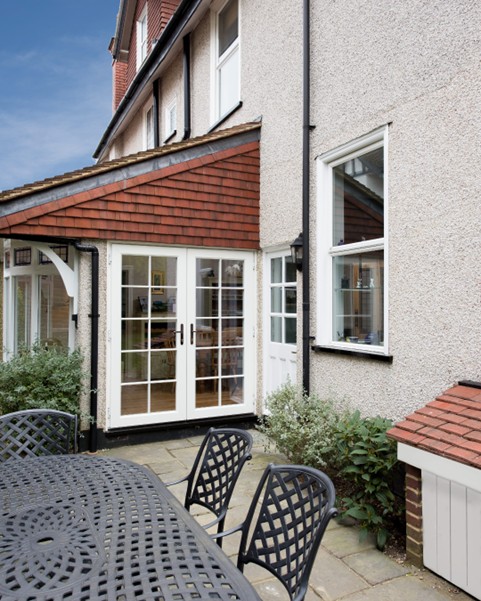
At Weald Cottage, a 1930s property in Woldingham, the owners were carrying out an extensive renovation and needed to replace all of the windows and doors.

They had originally considered timber but were concerned about the cost. After visiting the Elwyns showroom, they chose Evolution alternative timber-look casement windows instead.

Twelve windows were installed alongside French doors with sidelights and a timber entrance door. The homeowners were particularly pleased with how closely the windows fitted the traditional character of the cottage, commenting that they had received many compliments on the finished result.

It’s a good example of why the choice doesn’t have to be simply ‘timber or uPVC’. There is another option for homeowners who want traditional styling but have different priorities when it comes to maintenance and budget.

Why choose Elwyns?

We’ve been established in Carshalton since 1963, so we’ve spent more than six decades working with homeowners on replacement windows and doors.

We don’t think there is one material that suits every property. That’s why we offer a choice of timber, timber alternative, uPVC and aluminium.

Alongside Evolution, we work with Timber Windows, Whiteline, Everglade, Sheerline and Aluco, allowing us to look at the house first and then recommend products that suit it.

That experience is particularly useful when you’re working on an older property. Sometimes the right answer is genuine timber. Sometimes a timber alternative is a better fit. And sometimes another material makes more sense altogether.

Our Carshalton showroom is also a useful place to compare the different options before making a decision.

Most importantly, we’re still here once the installation is finished. We’ve been around for over 60 years, and we intend to continue looking after the customers who have trusted us with their homes.

Visit our Carshalton showroom

If you’re considering timber alternative windows in around Sutton or Surrey, we’d recommend seeing the different options for yourself.

Our showroom at 112–114 High Street, Carshalton gives you the chance to compare Evolution windows with other materials and look at the different profiles, colours, glazing and hardware in person.

You can talk through your property with our team, bring photographs or plans if you have them, and get a better idea of which options might suit.

You don’t have to know exactly what you want before you come in. That’s what we’re here for.

Visit Elwyns in Carshalton or get in touch to arrange a home visit and discuss your replacement windows.

uPVC vs Aluminium Windows: Which Is Best for Your Home?

Monday, August 17th, 2026

Replacing your windows is one of the most significant projects you can do for your home. New windows can enhance kerb appeal, improve comfort and reduce heat loss. A popular question that appears when people start looking into replacing them is the material, quite often: should I choose uPVC or aluminium windows?

Both uPVC and aluminium have evolved and improved a lot over the last decade. Modern uPVC windows are stronger, more resilient and available in a wider range of styles than ever before, while today’s aluminium offer good thermal performance alongside their slim, contemporary appearance.

At Elwyns, we’ve been helping homeowners across Surrey and South London choose replacement windows for more than 60 years. We take time to understand your property and help you find windows that will look right and perform well for many years.

Understanding the Difference

The biggest difference between uPVC and aluminium windows is the frame material, but that affects more than appearance.

uPVC is a durable, low maintenance material that has been used in window manufacturing for many years. Modern systems are designed to provide reliable insulation and are available in both traditional and contemporary styles.

Aluminium offers a stronger frame, allowing for slimmer sightlines and more glass. Advances in thermal break technology mean modern aluminium windows are now highly energy efficient, making them suitable for both new-build homes and renovation projects.

Both materials can deliver excellent results when manufactured to a high standard and installed correctly.

Appearance

uPVC Windows

Modern uPVC windows are far removed from the bulky white frames from the 1980s and 1990s. Available in a wide choice of colours, woodgrain finishes and frame styles, uPVC windows today are suitable for everything from traditional cottages to contemporary family homes.

Flush casement designs, decorative glazing bars and heritage-inspired detailing have made uPVC an increasingly popular choice for period properties where planning restrictions don’t require timber.

Aluminium Windows

Aluminium windows offer a cleaner, more contemporary look.

Because aluminium is naturally strong, the frames can be slimmer without compromising performance. This creates larger glazed areas and allows more natural light into the home.

They work particularly well in:

  • Contemporary homes
  • Kitchen extensions
  • Garden rooms
  • Homes with large openings
  • Modern renovations

That doesn’t mean aluminium is only suited to new properties. Many homeowners choose aluminium for the rear of a traditional home while retaining a more traditional appearance at the front.

Energy Efficiency

Energy efficiency is often one of the main reasons people replace their windows.

Both uPVC and aluminium windows are designed to meet modern performance standards and, when fitted correctly, can make a significant difference to the comfort of your home.

Modern windows typically include:

  • High-performance double or triple glazing
  • Low-emissivity glass
  • Warm edge spacer bars
  • Advanced weather seals

While uPVC has long been recognised for its insulating properties, advances in aluminium frame design mean the gap between the two materials is much smaller than it once was.

In reality, the quality of the window system and the installation are often more important than the material itself.

Maintenance

Both materials are relatively easy to look after, but there are some differences.

uPVC windows require very little maintenance. A regular clean with warm soapy water is generally all that’s needed to keep the frames looking their best.

Aluminium windows are equally straightforward to maintain. Their powder-coated finish is highly durable and designed to withstand the British weather without peeling or flaking.

Whichever material you choose, good-quality windows should continue to perform well with very little ongoing maintenance.

Strength and Durability

Aluminium has a natural strength that makes it particularly well suited to larger window designs.

If you’re planning wide openings or want slimmer frames with more glass, aluminium is often the preferred option.

uPVC is also an extremely durable material and performs exceptionally well in everyday residential settings. Modern manufacturing techniques have significantly improved both strength and longevity, making it a dependable choice for most homes.

The key is choosing quality products. Lower-specification windows, regardless of material, are less likely to provide the same long-term performance.

Which Is Better for Period Homes?

Many Victorian and Edwardian homes suit traditional flush casement or sliding sash windows in uPVC, particularly where homeowners want to improve energy efficiency while keeping maintenance to a minimum.

For homes where authenticity is the priority, timber may still be the most appropriate option, especially in conservation areas or listed buildings.

Aluminium is increasingly being used for rear extensions on period homes. This allows homeowners to enjoy larger glazed areas without affecting the traditional appearance of the front of the property.

Cost

Budget is naturally an important consideration.

In most cases, uPVC windows are the more affordable option, making them a popular choice for homeowners replacing several windows at once.

Aluminium windows generally represent a higher initial investment, reflecting both the material and the manufacturing process.

However, it’s worth looking beyond the initial quotation.

The quality of the product, the standard of installation and the level of aftercare can all have a greater impact on long-term value than the purchase price alone.

The Importance of Installation

Even the highest-quality window won’t perform as intended if it isn’t installed correctly.

Poor installation can lead to:

  • Draughts
  • Water ingress
  • Reduced thermal performance
  • Difficulty opening and closing windows
  • Premature wear

That’s why choosing an experienced installer is just as important as choosing the right material.

At Elwyns, every installation is carried out with care and attention to detail, ensuring your new windows perform as they should from day one.

The Windows We Recommend

At Elwyns, we work with manufacturers we know and trust.

Our uPVC windows are supplied by Whiteline and Everglade, offering a wide range of styles suitable for both traditional and contemporary homes.

Our aluminium windows come from Sheerline and Aluco. Sheerline offers modern, thermally efficient systems with slim sightlines, while Aluco specialises in steel-look aluminium windows that are particularly popular for heritage properties, internal screens and contemporary extensions.

By offering carefully selected ranges rather than every product on the market, we’re able to recommend solutions that we’ve seen perform well over many years.

So, Which Should You Choose?

So, Which Should You Choose?

uPVC windows are an excellent choice if you’re looking for:

  • Excellent value
  • Low maintenance
  • Strong thermal performance
  • A wide choice of styles and finishes

Aluminium windows are worth considering if you want:

  • Slimmer frames
  • Larger glazed areas
  • A contemporary appearance
  • Exceptional strength and durability

The right choice depends on your home, your budget and the style you’re trying to achieve.

Why Choose Elwyns?

Replacing your windows is a significant investment, and it’s important to work with a company you can trust.

Established in 1963, Elwyns has built its reputation on honest advice, quality workmanship and carefully selected products. Many of our customers come to us through recommendation or return to us for future projects because they know we’ll recommend what’s genuinely right for their home.

We also provide comprehensive guarantees and ongoing aftercare, giving you confidence that if you ever need us, we’ll be here to help.

Visit One of Our Showrooms

Choosing between uPVC and aluminium windows is much easier when you can see the differences for yourself.

Visit one of our showrooms in Carshalton or Dulwich to compare styles, finishes and colours, and speak to our experienced team.

Whether you’re replacing a single window or renovating your entire home, we’ll help you find windows that complement your property and are built to last.

French Doors vs Sliding Patio Doors

Saturday, July 25th, 2026

If you’re replacing your patio doors, one of the first decisions you’ll need to make is between French doors or sliding patio doors. Both are great, but they suit different homes and styles.

Some homeowners are looking for a traditional design that complements the character of their property, while others want more glass to make the most of the garden view. 

At Elwyns, we’ve been helping homeowners across Surrey and South London choose new windows and doors for more than 60 years. Here’s what to consider when comparing French doors and sliding patio doors.

French Doors

French doors have remained popular for generations. Their balanced, symmetrical design suits everything from Victorian terraces to detached family homes and cottages.

Both doors can be opened to create a generous opening onto the garden, making them a great choice if you enjoy entertaining or simply want to make the most of warmer days.

Our French doors are available in a range of materials, including timber from Timber Windows, aluminium from Sheerline and Aluco, uPVC from Whiteline and Everglade, and timber alternative from Evolution. That means you can choose a style that complements your home without compromising on performance.

Sliding Patio Doors

Sliding patio doors offer a different look altogether. Rather than opening on hinges, the glazed panels slide neatly behind one another, making them practical when it is tight on space.

They’ve become popular in kitchen extensions and garden-facing living spaces because they allow for larger areas of glazing and uninterrupted views outside.

At Elwyns, we offer sliding patio doors from Sheerline and PatioMaster, both of which combine slim frames with smooth operation and excellent thermal performance.

Which Style Lets in More Light?

If making a room feel brighter is your main priority, sliding patio doors generally have the advantage.

Because the frames are slimmer and the glass panels are larger, they allow more natural light into the room and provide wider views of the garden.

French doors still offer plenty of glazing, but the meeting point in the centre creates a more traditional appearance.

Thinking About Space

This is often one of the deciding factors.

French doors need room to open, either inwards or outwards, so it’s worth thinking about furniture, patios and planting before making a decision.

Sliding patio doors move within their own frame, making them a practical option where space is tighter or where you don’t want doors opening onto a seating area.

Which Is Better for a Period Home?

Both styles can work well, but the overall character of your property is worth considering.

French doors often feel more at home on period properties, particularly Victorian and Edwardian houses, where they complement the original architecture.

Sliding patio doors are often chosen for more contemporary homes or rear extensions, where the aim is to create larger openings and maximise views of the garden.

That said, many homeowners successfully combine traditional architecture with contemporary glazing. It comes down to the overall design rather than following a set rule.

Energy Efficiency

Modern patio doors are designed to keep your home comfortable throughout the year.

Whether you choose French doors or sliding patio doors, you’ll benefit from improved insulation compared to older doors, helping to reduce draughts and heat loss.

The quality of the installation is just as important as the product itself. A well-fitted door will perform better and continue to do so for years to come.

Which Door Is Right for You?

If you’re still undecided, it helps to think about what matters most to you.

French doors are often the preferred choice if you’re looking for a more traditional appearance or want both doors to open fully onto the garden.

Sliding patio doors are ideal if your priority is larger panes of glass, uninterrupted views or making the most of the available space.

Many of our customers visit one of our showrooms to compare the two side by side before making a decision. Seeing the products in person often makes it much easier to picture them in your own home.

Why Choose Elwyns?

Replacing your patio doors is an investment, so it’s important to choose products that are made to last and a company that will be there long after the installation is complete.

Established in 1963, Elwyns has built its reputation on quality products, experienced installation and honest advice. We work with carefully selected manufacturers and take the time to recommend doors that genuinely suit your home rather than following passing trends.

Whether you’re renovating a period property, extending your home or simply replacing ageing doors, we’ll help you find a solution that looks right and performs well for years to come.

Composite or Timber Front Doors: Which Should You Choose?

Friday, July 24th, 2026

Replacing your front door is one of the simplest ways to improve the appearance of your home, but it’s also an investment you’ll live with for many years. Alongside style, you’ll want to think about security, energy efficiency, maintenance and how well the door complements your property.

For many homeowners, the decision comes down to composite or timber front doors. Both have their strengths, and both can work beautifully when they’re chosen for the right home.

At Elwyns, we’ve been helping homeowners across Surrey and South London choose replacement windows and doors since 1963. Rather than steering every customer towards the same product, we take the time to understand what matters to you and recommend a front door that’s right for your home.

Why Choose a Timber Front Door?

Timber has remained as the benchmark for traditional front doors due the warmth and authenticity. They suit period properties particularly well, from Victorian terraces and Edwardian villas to detached Arts and Crafts homes and country cottages.

The proportions, detailing and natural grain of timber front doors give it a depth of character that’s difficult to replicate.

Our timber front doors are supplied by Timber Windows, who combine traditional craftsmanship with modern performance. They offer excellent insulation, security and weather resistance while respecting the character of older homes.

If you’re renovating a period property or replacing an original entrance door, timber is often the most sympathetic choice.

Why Choose a Composite Front Door?

Composite front doors have been popular because they offer many practical benefits that homeowners are looking for.

Made with a combination of materials, they’re designed to be strong, thermally efficient and easy to maintain. Modern composite doors are also available in a range of traditional and contemporary styles, making them suitable for a wide variety of homes.

At Elwyns, we offer composite front doors from Fortrezz, English Door Company and Palladio. Each range has a distinctive style so we can recommend a door that suits both your home and your personal taste.

Appearance: Which Looks Better?

For older homes, timber has a natural advantage. The texture and craftsmanship complement original brickwork, decorative mouldings and period features in a way that feels authentic.

Today’s composite doors have come a long way. High-quality woodgrain finishes and traditional panel designs mean many homeowners can achieve a heritage look while enjoying the convenience of a lower-maintenance material.

It’s less about which material is better and more about which is better suited to your home.

Maintenance and Longevity

Every front door needs a little care, but the level of maintenance varies depending on the material.

Timber is a natural product and benefits from occasional maintenance to protect its finish and keep it looking its best. With the right care, a quality timber door can last for decades. Timber Windows also offer fantastic guarantee periods, including 12 years for the paint finish and 30 years for rot and fungal.

Composite doors require very little upkeep beyond routine cleaning, making them a practical option for homeowners looking for a low-maintenance solution.

Whichever material you choose, quality makes a difference. A well-made door fitted correctly should continue to perform for many years.

Energy Efficiency

A modern front door should help your home feel warmer, quieter and more comfortable.

Both timber and composite doors offer excellent thermal performance when manufactured to a high standard and professionally installed. They can help reduce draughts, improve insulation and contribute to a more energy-efficient home.

The quality of the installation is just as important as the product itself. Even the best door won’t perform as it should if it hasn’t been fitted properly.

Security

Whether you choose timber or composite, security should never be a compromise.

Our front doors are fitted with multi-point locking systems and robust hardware, providing the strength and reliability homeowners expect from a new entrance door.

Combined with professional installation, they offer reassurance that your home is well protected.

Which Front Door Is Best for Your Home?

If preserving the original character of your property is your priority, a timber front door may be the right choice.

If you’d prefer a traditional appearance with minimal maintenance, a composite front door could be a better fit.

The best way to decide is to see the different styles and materials in person. Comparing colours, finishes and hardware often makes the decision much easier than looking at photographs alone.

Why Homeowners Choose Elwyns

Choosing a new front door is about more than selecting a product. It’s about choosing a company you can trust to guide you through the process and stand behind its work.

Elwyns has been established for over 60 years, and many of our customers return when they would like help with additional home improvement projects or come to us through recommendation. We work with carefully selected manufacturers, experienced installers and provide comprehensive guarantees.

Visit Our Showrooms

If you’re comparing composite and timber front doors, we recommend seeing both in person before making your decision.

Visit our showrooms in Carshalton, Dulwich or Woldingham to explore different styles, colours and finishes, and speak with our experienced team. We’ll help you find a front door that lasts and complements your home.

Best Front Door Colours for Victorian Homes

Tuesday, July 7th, 2026

For many Victorian homeowners, choosing a new front door can be difficult. However, with so much variety in colours and materials available now, one of the biggest tasks is understanding and identifying what your home needs. Many homeowners become torn between staying true to the property’s heritage and choosing something modern. A new front door can emphasise the original character and architecture of your home or update your welcome home to a new and contemporary look.

Inspired by medieval designs, Italian farmhouses and the early 18th century Baroque era, Victorian architecture is known for its’ eclectic style with sliding sash bay windows, stained glass and ornate detailing. The right front door colour can highlight these features whereas the wrong colour can create a jarred and mismatched look.

Whether you’re restoring a traditional terrace in Dulwich, updating a semi-detached Victorian property in Carshalton or renovating a larger period home in Surrey, below is our guide for the best front doors colours for Victorian houses.

Why does colour matter?

While many people associate period homes with muted colours, at the time, Victorian homeowners often used bold and rich shades. Visually, Victorian homes have a lot going on. Between decorative brickwork, stone lintels and original tile pathways, there are already several colours and textures dominant.

The most effective front door colours do not fight against these features, they complement them.

Before choosing a colour, take a step back and look at the dominant tones of your home.

Is the brickwork warm red? Soft yellow London stock? Painted white? Does the property sit in full sun or under mature trees? These details have a significant impact on how a colour will appear once installed.

Why dark colours work well on Victorian homes

Many popular Victorian front door colours tend to be dark due to the visual weight they create. By drawing your eye towards the entrance, it effectively establishes the front door as a focal point without overwhelming the facade. 

In colour theory, darker shades are also associated with permanence, sophistication and confidence.

Black

Black remains one of the most popular choices for period homes. Against traditional brickwork, a black front door creates a strong and timeless contrast instead of tend-led colours. It works well with white-paint window frames, stone detailing or decorative glazing, allowing these features to stand out. 

For homeowners who want a colour that will look as good in twenty years as it does today, black is difficult to beat. If you’re considering black, avoid choosing the darkest black available. Victorian architecture often benefits from softer blacks that contain subtle blue or charcoal undertones.

Recommend shades: Farrow & Ball Railing No.31, Little Greene Lamp Black 228, RAL 9005 Jet Black

Green

Due to the landscape of mature trees and gardens, a lot of British architecture features green. From a colour psychology perspective, green is associated with balance, harmony and longevity. 

Deep shades such as heritage green, racing green and olive green complement both red brick and London stock brick. For a more authentic Victorian look, you can add brass furniture too.

Recommended shades: Farrow & Ball Studio Green No.93, Farrow & Ball Duck Green No.W55, Little Greene Obsidian Green, RAL 6005 Moss Green, RAL 6009 Fir Green

Navy Blue

Blue is often associated with trust, stability and calmness. A deep navy front door retains the sophistication of black while introducing a little more warmth and personality.

If your home has lighter brickwork, a deep blue would be very effective at creating contrast without dominating the entrance.

Recommended shades: Farrow & Ball Hague No.30, Farrow & Ball Stiffkey Blue no.281, Little Greene Dock Blue, RAL 5008 Grey Blue, for powder-coated aluminium doors RAL 5003 Sapphire Blue

Burgundy & Deep Red

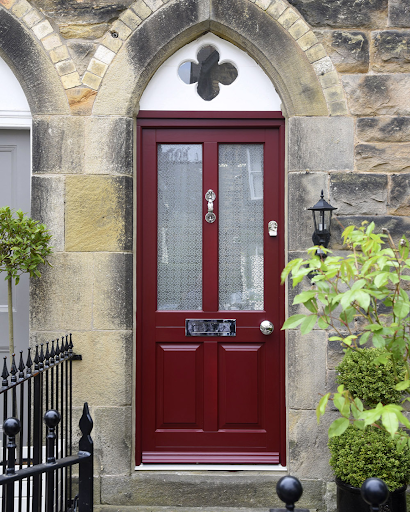
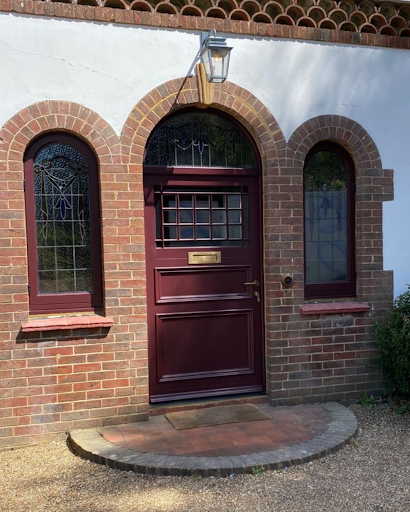
Rich reds were widely used during the Victorian period and feel authentic when chosen carefully. While bright reds can feel modern and overpowering, darker shades such as burgundy, claret and oxblood feel entirely at home on period properties.

These colours create warmth and depth, particularly during autumn and winter months when the front entrance naturally becomes more prominent. You can also add traditional brass hardware and stained glass detailing to complement the luxurious tone of rich red.

For homeowners wanting something with character but not necessarily contemporary, burgundy is often an overlooked choice.

Shades such as RAL 3005 Wine Red or Little Greene Baked Cherry introduce warmth and character while remaining sympathetic to traditional architecture.

Recommended shades: Little Greene Baked Cherry, Little Greene Adventurer, Farrow & Ball Eating Room Red, RAL 3005 Wine Red, RAL 3004 Purple Red

Dark Grey

Anthracite grey has become one of the UK’s most popular door colours, but it might not be the best fit for a Victorian property as it can sometimes flatten the unique architectural details.

Darker charcoal tones tend to work better than lighter greys, especially when combined with a traditional door design. 

Recommended shades: Farrow & Ball Down Pipe No.26, Farrow & Ball Manor House Gray No.265, Little Greene Basalt 221, Little Greene Lamp Black 228, RAL 7022 Umbra Grey

Bold Statement Colours

While many Victorian homeowners prefer traditional shades, some properties can carry bolder colours remarkably well.

Depending on the style and location of the property, colours such as:

  • Aubergine 
  • Deep teal 
  • Mustard yellow 
  • Heritage turquoise 

can create a distinctive entrance while remaining sympathetic to Victorian design principles.

The key is choosing rich, muted versions of these colours rather than bright contemporary tones.

If you’re considering a more adventurous colour choice, it’s often worth viewing samples against the brickwork and surrounding architecture before making a final decision.

Show off your personality

Across many suburban areas such as Dulwich and Brockley, where most of Victorian houses are terraced or semi-detached and fairly similar, lots of homeowners create unique entrances with bold shades.

You can keep striking colours such as bright pinks, reds or blues authentic to the Victorian aesthetic of the house with traditional styling of furniture or stained glass.

Matching Your Door Colour to Your Brickwork

One of the most important considerations when choosing a front door colour is the existing brickwork of your property.

Red Brick Victorian Homes

Often suit:

  • Black 
  • Navy blue 
  • Heritage green 
  • Deep burgundy 
  • Cream 

London Stock Brick

Typically works well with:

  • Black 
  • Dark green 
  • Deep blue 
  • Charcoal grey 

Painted or Rendered Properties

Offer more flexibility and can accommodate:

  • Bold heritage colours 
  • Soft pastels 
  • Dark contemporary tones 
  • Traditional neutrals 

The aim is to create harmony between the door and the wider façade rather than allowing one element to dominate.

Consider Conservation Area Requirements

Many Victorian homes fall within conservation areas where local planning guidance may influence external alterations.

While replacing a front door often falls within permitted development, colour choices can occasionally be subject to local considerations, particularly on listed buildings. In these cases, traditional heritage colours are generally more likely to complement local guidance and neighbouring properties.

Before making significant changes, it’s always worth checking whether any restrictions apply.

Choosing the Right Front Door Material

Colour is important, but so is the door itself.

Modern front doors are available in a range of materials, including:

  • Timber 
  • Composite 
  • Timber alternative designs 

For Victorian homes, many homeowners are looking for a solution that combines traditional appearance with modern performance.

A well-designed door should not only look appropriate but also deliver excellent security, energy efficiency and durability.

Finding the Right Colour for Your Home

The best front door colour for a Victorian home is ultimately the one that complements the architecture, enhances the property’s character and reflects your personal style.

For some homeowners, that will be a timeless black or heritage green. For others, a rich burgundy, navy blue or even a more distinctive period-inspired shade may be the perfect fit.

The most successful Victorian entrances are those that feel as though they belong to the property rather than competing with it.

At Elwyns, we work with homeowners across South London and Surrey to find front doors that complement the age, style and character of their homes. Whether you’re restoring a Victorian terrace or updating a larger period property, our team can help you explore styles, colours and finishes that will look right for years to come.

Contact us today to arrange a free quote.

Why Are Modern Windows More Energy Efficient in 2026?

Saturday, June 13th, 2026

Energy efficiency has become one of the main reasons homeowners choose to replace their windows. Rising energy costs, changing building standards and better product design have all pushed window technology forward over the last decade.

But while “energy-efficient windows” has become a common phrase, many older homes are still fitted with glazing that performs far below modern standards.

In 2026, the difference between older windows and modern systems is more noticeable than ever. Homes feel warmer, draughts are reduced and heating systems do not have to work as hard to maintain a comfortable temperature.

At Elwyns, we have seen how much window technology has improved over the years. Here is why modern windows are now far more energy efficient and what homeowners should look for when considering replacements.

Better Glass Technology

One of the biggest improvements has come from the glass itself.

Modern double glazing is far more advanced than the older sealed units installed twenty or thirty years ago. Today’s glazing is designed to reduce heat loss while still allowing natural light into the home.

Many modern windows now include:

  • Low-emissivity glass coatings
  • Gas-filled sealed units (such as argon)
  • Warm edge spacer bars
  • Improved solar control

Together, these features help keep warmth inside during winter and reduce excessive heat gain during summer.

For homeowners replacing older double glazing, the improvement in comfort can be immediate.

Improved Frame Design

Window frames have evolved significantly in recent years.

Older frames often allowed heat to escape through weaker seals, thinner profiles or less efficient materials. Modern systems are designed with insulation and thermal performance in mind from the outset.

Whether choosing:

  • uPVC
  • aluminium
  • timber
  • timber-alternative systems

modern frames now offer much stronger thermal performance than previous generations.

This is particularly noticeable with today’s aluminium systems, which now include advanced thermal breaks that dramatically improve insulation compared to older aluminium windows.

Tighter Seals and Reduced Draughts

Even good glazing will struggle to perform if cold air can enter around the frame.

Modern windows are manufactured with far more precise tolerances than older systems. Combined with improved seals and professional installation, this helps reduce:

  • Draughts
  • Air leakage
  • Cold spots near windows
  • Heat loss around opening sections

Many homeowners do not realise how much warmth their existing windows are losing until they replace them.

Better Installation Standards

Installation quality plays a major role in energy efficiency.

A well-made window fitted poorly may still underperform. Modern installation methods focus far more heavily on achieving airtightness, weather protection and long-term performance.

At Elwyns, we see installation as equally important as the product itself. Attention to detail around fitting, sealing and finishing has a direct impact on how efficiently windows perform over time.

Modern Windows Help Homes Feel More Comfortable

Energy efficiency is not just about reducing bills. It is also about how the home feels day to day.

Older windows can create:

  • Cold draughts
  • Uneven room temperatures
  • Condensation issues
  • Rooms that heat and cool too quickly

Modern glazing helps create a more stable indoor environment, making homes feel noticeably more comfortable throughout the year. This is often one of the first things homeowners notice after replacing older windows.

Reduced Condensation Problems

Condensation is another area where modern windows have improved significantly.

Older glazing units and poorly insulated frames are far more likely to develop condensation around the glass or frames, particularly during colder months.

Modern windows help reduce this through:

  • Better thermal insulation
  • Improved internal glass temperatures
  • Higher-quality seals
  • More efficient glazing systems

While ventilation still plays an important role within the home, modern windows are far better equipped to manage temperature differences than older systems.

Energy Ratings Matter More Than Ever

As homeowners become more conscious of running costs and environmental impact, window energy ratings have become increasingly important.

Higher-performing windows can help:

  • Reduce heat loss
  • Improve EPC ratings
  • Support lower energy consumption
  • Contribute to long-term savings

However, not all windows perform to the same standard. The quality of the system, glazing and installation all make a difference.

A cheaper window may achieve a lower upfront cost while performing far less effectively over time.

Traditional Homes Can Still Benefit

One common misconception is that energy-efficient windows only suit modern properties.

In reality, many traditional homes can benefit significantly from carefully chosen replacement windows. Modern systems are now available with:

  • Traditional detailing
  • Slimmer sightlines
  • Heritage styling
  • Timber-look finishes
  • Sash window designs

This allows homeowners to improve thermal performance while still respecting the character of the property.

At Elwyns, many of the homes we work on are period or character properties where maintaining the right appearance is just as important as improving efficiency.

Long-Term Value Matters

Replacing windows is not only about improving performance today. It is also about choosing products that will continue to perform well for years to come.

At Elwyns, we have been established for over 60 years, and that longevity matters. Homeowners want reassurance that the company fitting their windows will still be there in the future.

We focus on products that are designed for long-term reliability and professionally installed by experienced teams. If anything happens to your windows, we will be there to help.

Thinking About Replacing Your Windows?

If your current windows are draughty, difficult to open or no longer performing efficiently, modern replacement windows can make a noticeable difference to comfort, appearance and energy performance.

At Elwyns, we help homeowners choose windows that suit both the property and the way they live, whether that means traditional timber-style designs or more contemporary systems.

You can explore window options at our showrooms in:

  • Dulwich
  • Carshalton
  • Woldingham

Or contact the Elwyns team to discuss your project and the most suitable options for your home.

Signs It’s Time to Replace Your Windows (And What to Do Next)

Saturday, June 13th, 2026

Windows are a large part of a home, visually they take up a large proportion of a property and help with the efficiency. While high quality windows are designed to last for years, they cannot last forever.

While some signs are obvious, gradual changes such as condensation or difficulty opening windows can go unnoticed until they become serious.

Knowing when to replace your windows can reduce energy bills, ongoing and expensive repairs.

At Elwyns, we have been replacing and installing windows and doors for over 60 years. Here are some of the most common signs to consider new windows, and what to do next.

1. Your Windows Feel Draughty

One of the most obvious signs that your windows no longer work properly is noticeable draughts around the frames or opening sections.

Older or poorly fitted windows can allow cold air into the home, making rooms less comfortable and increasing heating costs during colder months.

Common causes include:

  • Worn seals
  • Warped frames
  • Poor installation
  • Deterioration over time

Modern replacement windows are designed to create a tighter seal around the window, helping improve comfort and thermal performance across your home.

2. Condensation Building Up Between the Glass

Sometimes condensation on the inside of windows can be caused by ventilation problems. However, condensation trapped between the panes of double glazing is usually a sign of a failed sealed unit.

When this happens:

  • Moisture becomes trapped inside the glass unit
  • Visibility is reduced
  • Thermal performance decreases
  • The window becomes less efficient

Failed glazing units are a common sign that your windows need replacing, particularly if there are multiple windows with trapped condensation.

3. Your Windows No Longer Suit Your Home

Sometimes the decision is not purely about performance. One of the biggest reasons homeowners change their windows is because they want to improve the appearance\ of the property or adjust to a style that better suits the character of the home.

Modern windows are now available in a wide range of styles, including:

  • Traditional sash windows
  • Flush casement windows
  • Contemporary aluminium designs
  • Timber and timber-alternative options
  • Modern uPVC systems

The right windows can completely transform the appearance of a property from both inside and out.

4. Your Energy Bills Are Increasing

Older windows are often far less energy efficient than modern systems.

If your home:

  • Feels colder in winter
  • Heats up quickly in summer
  • Requires more heating to stay comfortable

your windows may no longer be insulating effectively.

To reduce heat loss and improve energy efficiency over time, modern windows offer high performance glazing and improved technology for the frame.

5. Windows Are Difficult to Open or Close

Windows should operate smoothly and securely. If they are becoming stiff, sticking or failing to close properly, this may indicate:

  • Frame movement
  • Warping
  • Worn hinges or hardware
  • General age-related wear

Windows that do not function properly can impact both security and ventilation, and issues often get worse over time.

6. You Are Noticing More Outside Noise

Modern glazing systems can significantly filter and suppress noise from the outside compared to older windows.

If you are hearing:

  • More traffic noise
  • Neighbourhood noise
  • Wind or weather sounds

your current windows may not be providing the insulation they once did.

Upgrading to modern double can make a noticeable difference, especially in high traffic and busy areas.

7. The Frames Are Damaged or Deteriorating

Visible wear and tear are strong indicators that you should replace your windows.

Signs can include:

  • Rotting timber
  • Cracked or warped frames
  • Peeling finishes
  • Corrosion or discolouration
  • Water ingress around windows

While some minor issues can be repaired, widespread deterioration usually makes replacement the more practical long-term solution.

8. Your Home No Longer Feels Secure

Older windows often do not offer the same level of security as modern systems.

Advances in window technology and design now offer:

  • Improved locking systems
  • Stronger frames
  • Better glazing security
  • Enhanced overall performance

Replacing outdated windows can improve both peace of mind and the overall safety of the property.

What to Do Next

If you are noticing any of these signs, we recommend speaking with an experienced window specialist.

A professional assessment can help determine:

  • Whether repair or replacement is the better option
  • Which materials and styles suit your property
  • How to improve energy efficiency and comfort
  • Any planning or conservation considerations

We focus on solutions that are suitable for your property, professionally installed and built for long term.

Why Choosing the Right Installer Matters

Even the highest-quality window will only perform properly if it is fitted correctly.

Poor installation can lead to:

  • Draughts
  • Water ingress
  • Reduced efficiency
  • Operational issues
  • Premature wear

With over 60 years of experience, Elwyns provides professional installation along with long-term support and aftercare. That longevity matters because homeowners want confidence that the company fitting their windows will still be there years down the line. If anything happens to your windows, our team will be there to help.

Visit an Elwyns Showroom

We always recommend choosing your replacement windows in person to make it easier for you. Being able to see, touch and operate the different styles, materials and finishes up close, helps to make an informed decision on something that will be a large part of your home for years to come.

You can explore window options at our showrooms in:

  • Dulwich
  • Carshalton
  • Woldingham

Speak to Elwyns About Replacement Windows

If you think it might be time to replace your windows, Elwyns are here to help.

We can guide you through the available options and recommend windows that suit your home, your needs and the character of your property.

Contact Elwyns today or visit one of our showrooms to discuss replacement windows for your home.

Top 7 Front Door Styles for Traditional Homes in the UK

Friday, May 22nd, 2026

A well-chosen front door can completely transform the feel of a traditional home. From Victorian terraced to Arts and Crafts properties, the right entrance door should complement the character of the building while still offering the security, insulation and reliability expected with a modern system.

For many homeowners, it can be difficult to balance traditional appearance with long-term performance. The best front doors achieve both.

At Elwyns, we have been helping homeowners choose windows and doors for over 60 years, with a focus on products that are thoughtfully designed, professionally installed and built to last. Here are seven front door styles that continue to work particularly well for traditional homes across the UK.

1. Traditional Panelled Front Doors

Panelled front doors remain one of the most timeless choices for traditional properties. With balanced proportions and classic detailing panelled doors compliment a variety of homes, especially Georgian, Victorian and Edwardian properties.

Typical features include:

  • Raised or moulded panels 
  • Traditional glazing layouts 
  • Symmetrical proportions 
  • Heritage-style hardware 

This style works particularly well where homeowners want to maintain the original character of the property while improving performance and security.

2. Composite Front Doors with Heritage Styling

Composite front doors have become more and more popular with homeowners who want something that looks traditional with modern performance.

At Elwyns, we supply carefully selected composite door ranges from:

  • Fortrezz 
  • English Door Company 
  • Palladio 

These ranges offer traditional designs with the practical benefits of:

  • Strong security 
  • Excellent insulation 
  • Low maintenance 
  • Long-term durability 

Modern composite doors can replicate the appearance of painted timber very well, making them a practical choice for many traditional homes.

3. Timber Front Doors

For period properties, timber front doors often provide the most authentic appearance. Their natural texture, detailing and proportions suit older architecture particularly well.

Timber front doors remain especially popular for:

  • Victorian homes 
  • Edwardian terraces 
  • Listed buildings 
  • Conservation area properties 

At Elwyns, we understand why it is important to preserve the character and charm of a property while improving performance for every day. Our timber doors offer a traditional option for homeowners who want to upgrade the aesthetics or maintain the heritage of their home.

4. Front Doors with Decorative Glazing

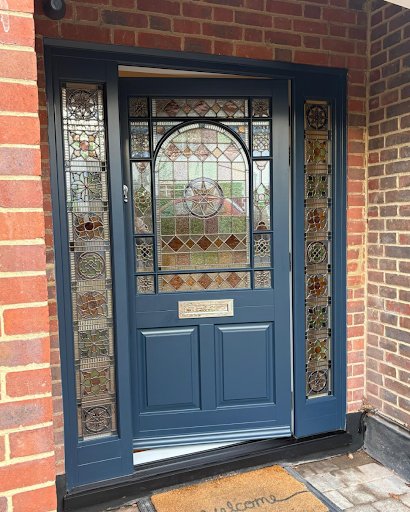
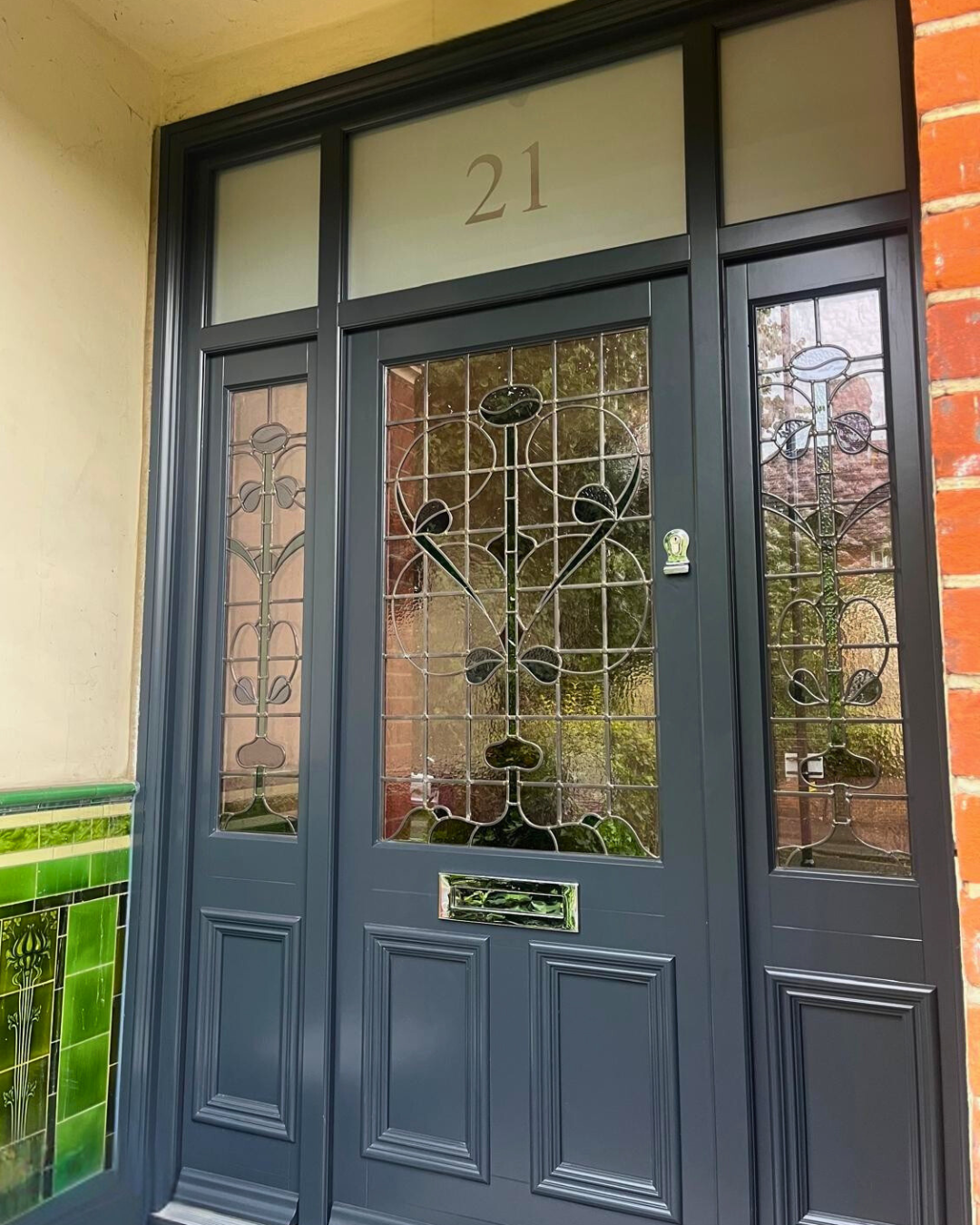
Blue grey timber front door with custom encapsulated stained glass and chrome furniture (Harewood Grey)

Decorative glazing has long been associated with traditional British entrance doors. Frosted, leaded and patterned glazing can add character while also bringing more natural light into the hallway.

Popular options include:

  • Etched glass 
  • Leaded designs 
  • Frosted glazing for privacy 
  • Traditional stained glass detailing 

Decorative glazing is particularly effective in darker entrance halls where additional light can make the space feel more open and welcoming.

5. Front Doors with Sidelights

Front doors with sidelights are a classic feature on many traditional homes. Side panels help create a wider, more balanced entrance while allowing additional natural light into the property.

They are especially well suited to:

  • Detached homes 
  • Victorian properties 
  • Wider entranceways 
  • Homes with darker hallways 

With carefully selected glazing, sidelights can maintain privacy while softening the appearance of the entrance.

6. Cottage Style Front Doors

Cottage-style or stable front doors offer a softer and more relaxed appearance that suits character homes particularly well.

Features often include:

  • Vertical plank detailing 
  • Smaller glazed sections 
  • Traditional ironmongery 
  • Heritage-inspired colours 

This style works especially well for cottages, rural homes and properties where a less formal appearance feels more appropriate.

7. Traditional Front Doors in Heritage Colours

Colour can have a significant impact on how a front door feels. The best choices are usually those that work naturally with the brickwork, stone or render of the property rather than following short-term trends.

Popular traditional front door colours include:

  • Deep green 
  • Navy blue 
  • Burgundy 
  • Soft black 
  • Muted greys and off-whites 

A well-considered colour choice can help a front door feel timeless and appropriate to the age of the property.

Choosing the Right Front Door for a Traditional Home

When choosing a front door for a traditional property, appearance is only one part of the decision.

It is also important to consider:

  • Security and locking systems 
  • Thermal performance 
  • Maintenance requirements 
  • Proportions and detailing 
  • Long-term durability 

The most successful front doors feel appropriate to the property while offering modern levels of comfort and reliability.

Why Quality and Installation Matter

Even the best front door will only perform properly if it is installed correctly. Poor installation can lead to draughts, water ingress, reduced security and long-term issues with operation.

At Elwyns, we have been established for over 60 years, and that longevity matters. Homeowners want reassurance that the company fitting their front door will still be there years down the line.

We provide professional installation along with comprehensive guarantees and long-term aftercare. If anything happens to your door, our team will be there to help.

Visit an Elwyns Showroom

Choosing a front door is often easier in person. Seeing the colour, finish, glazing and hardware up close can make a significant difference when comparing options.

You can explore traditional front door styles at our showrooms in:

Speak to Elwyns About Traditional Front Doors

If you are considering replacing the front door on your traditional home, the team at Elwyns is here to help.

We can guide you through the available styles, materials and finishes to help you choose a front door that feels right for your property and built to last.

Contact Elwyns today or visit one of our showrooms to discuss traditional front doors for your home.

Composite Doors

Wednesday, May 20th, 2026