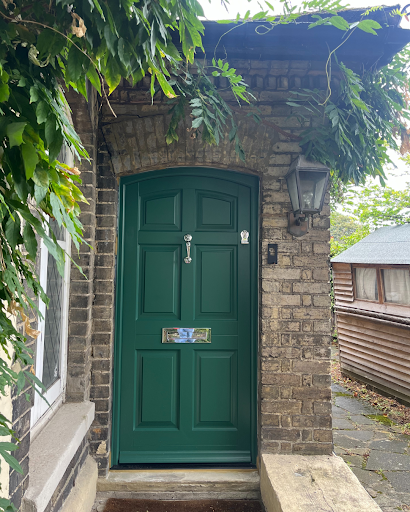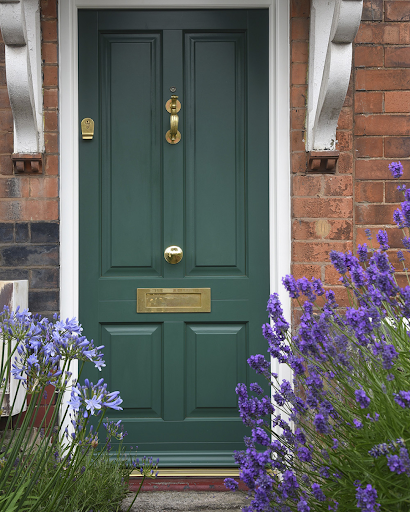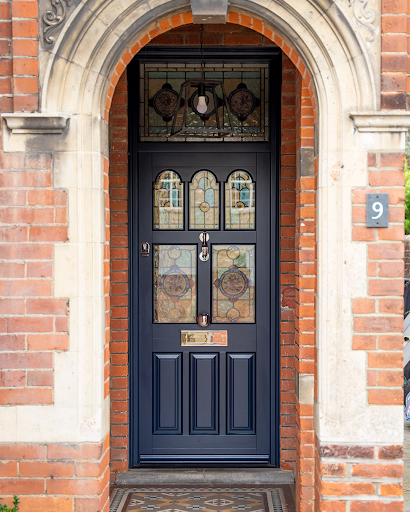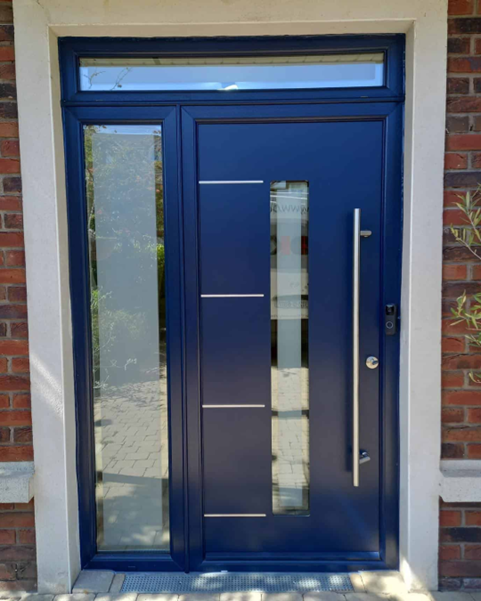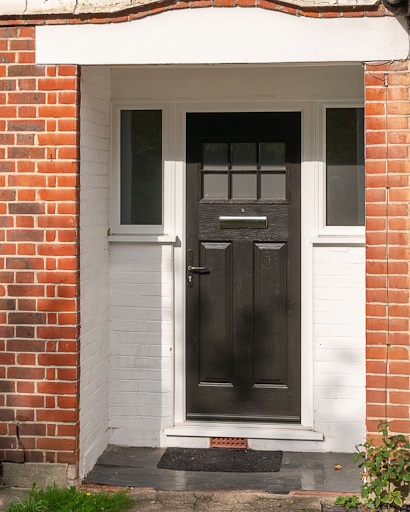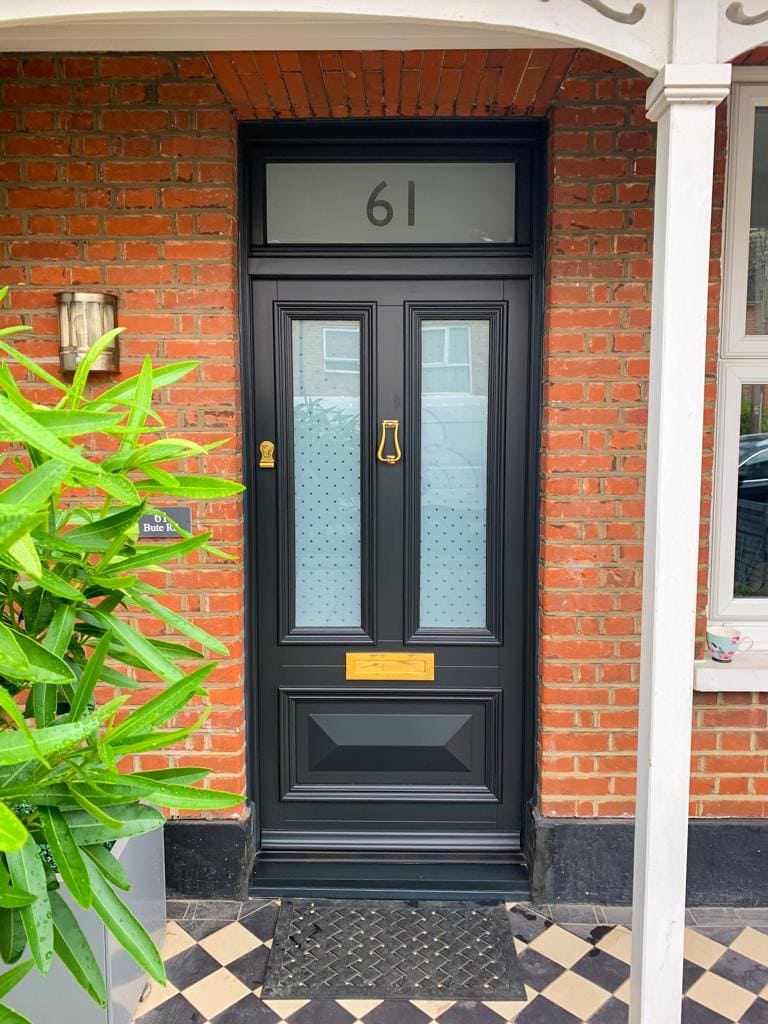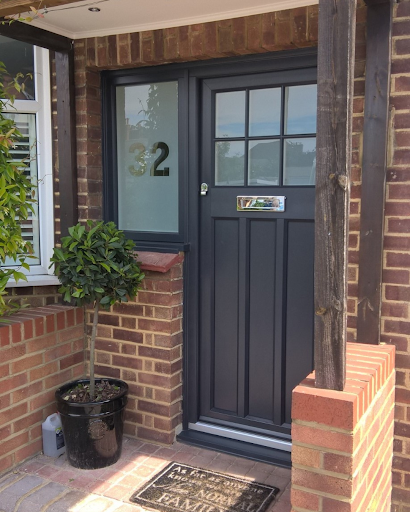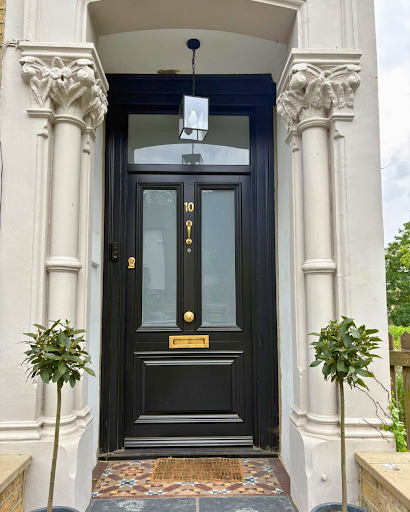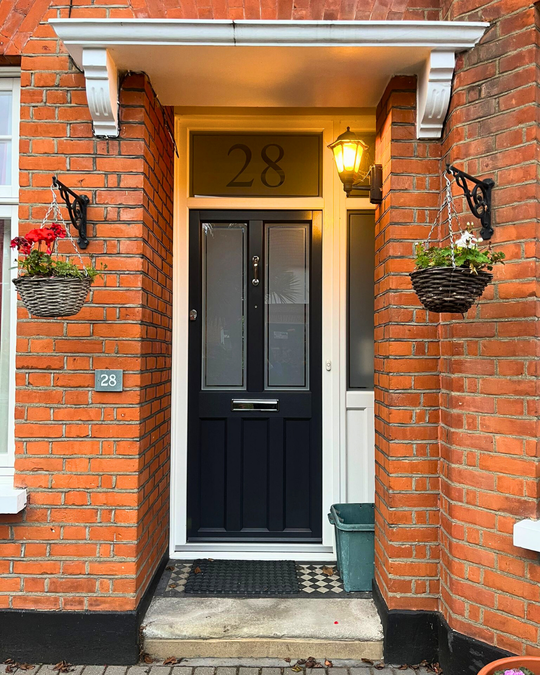
The houses might share the same brickwork, windows and proportions, but a different door colour, a panelled design or a piece of decorative glass can make each one feel like its own home. This is particularly noticeable on older terraces, where the front door is often one of the most distinctive features of the front of the property. There are plenty of ways to change your door without losing the character of the property.
From traditional timber and timber alternative doors to composite designs, decorative glazing and bold paint colours, here are some ideas to consider when choosing a new front door for a terraced house.
Look at the house before you look at the door
image_carousel id=”carousel_6ab2bebe71139″ class=”max-600 ml-auto mr-auto mt-4 mb-4″]
It can be tempting to start by looking through door designs and picking the one you like most. With a terraced house, it’s usually better to work the other way around.
You should consider the period of your home, Victorian, Edwardian or 1930s terrace. Is the brickwork red or London stock? Does the entrance sit directly on the front elevation or is it recessed? Are there original sash windows nearby? These details will give you a good idea of what will work on your property.
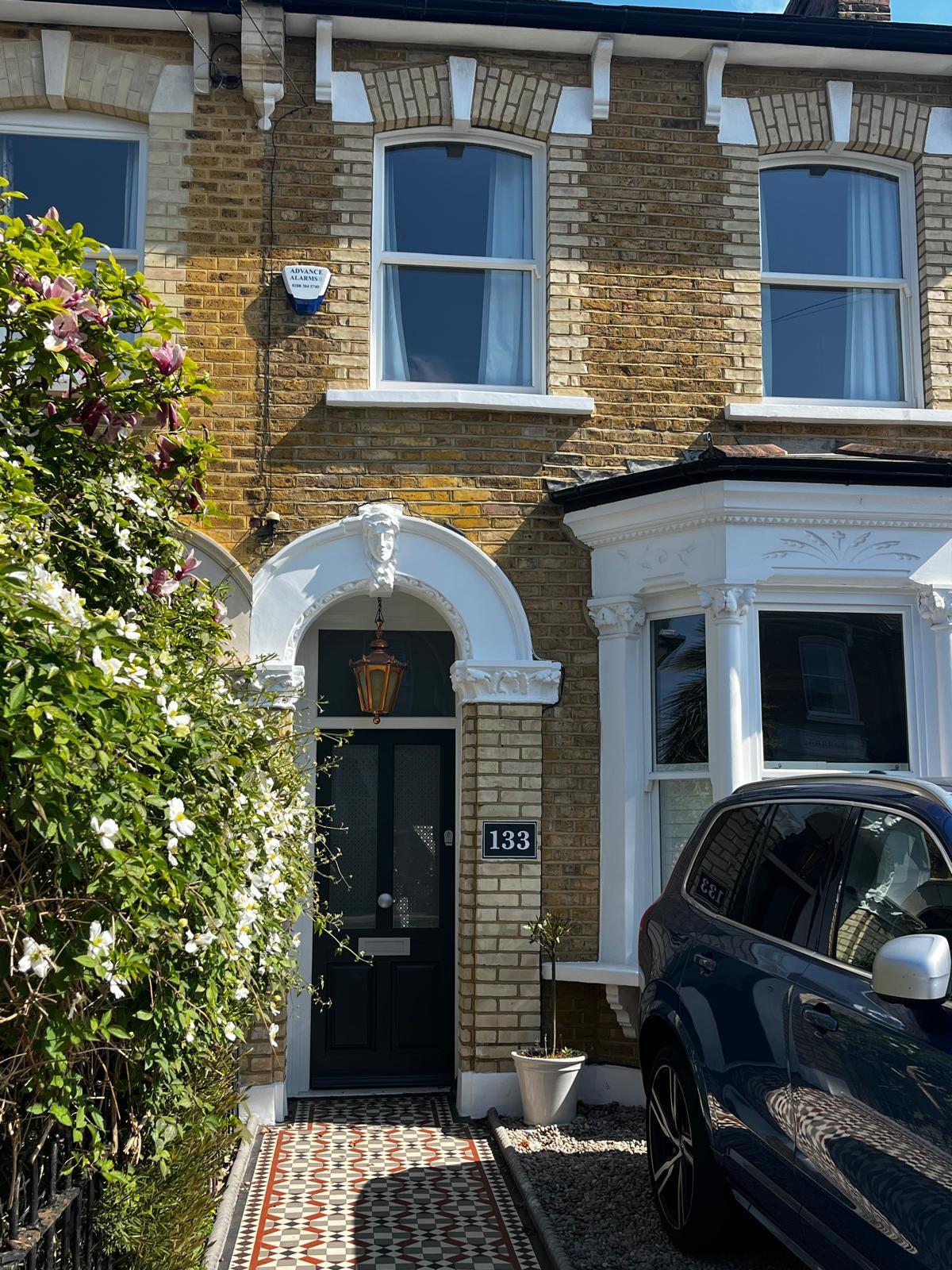
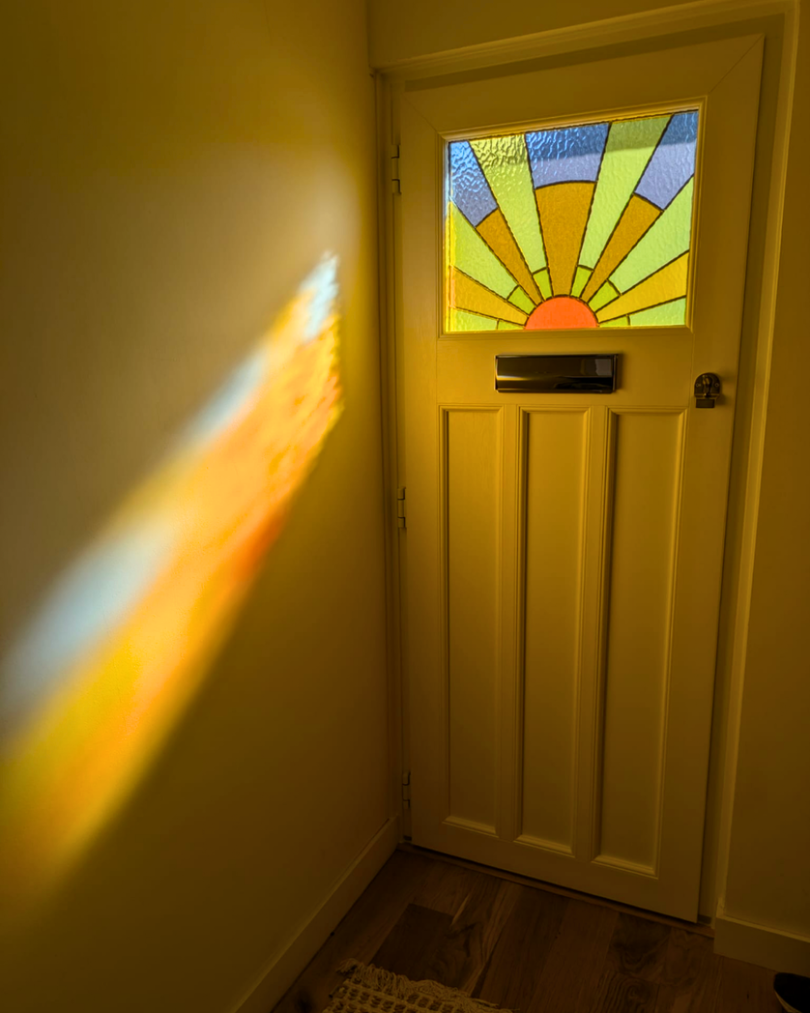
A Victorian terrace, for example, can usually carry quite a traditional door with strong panel detailing and decorative glazing. A 1930s property may suit something simpler and more understated. There isn’t a rule saying that a period house needs an exact replica of its original door, but the proportions and details should feel comfortable with the rest of the property.
It is also worth looking at the doors on the houses around you but not necessarily coping them. It can give you a better sense of what suits the street.
Traditional panelled doors are hard to get wrong
For many terraced houses, a traditional panelled door is where most people start. There are plenty of variations. You might have a completely solid door with several recessed panels, a glazed section towards the top, or a combination of smaller panes and panels.
The proportions matter more than the number of panels. A door with the right balance can make a narrow entrance look much more considered, whereas an overly complicated design can feel out of place.
Panelled doors also give you plenty of scope to introduce your own style. Keep the colour understated and let the architecture do the work or choose a stronger shade and make the entrance more of a feature.
For Victorian and Edwardian properties in particular, traditional detailing can help a replacement door sit naturally alongside original features elsewhere on the house.
Front doors and glass
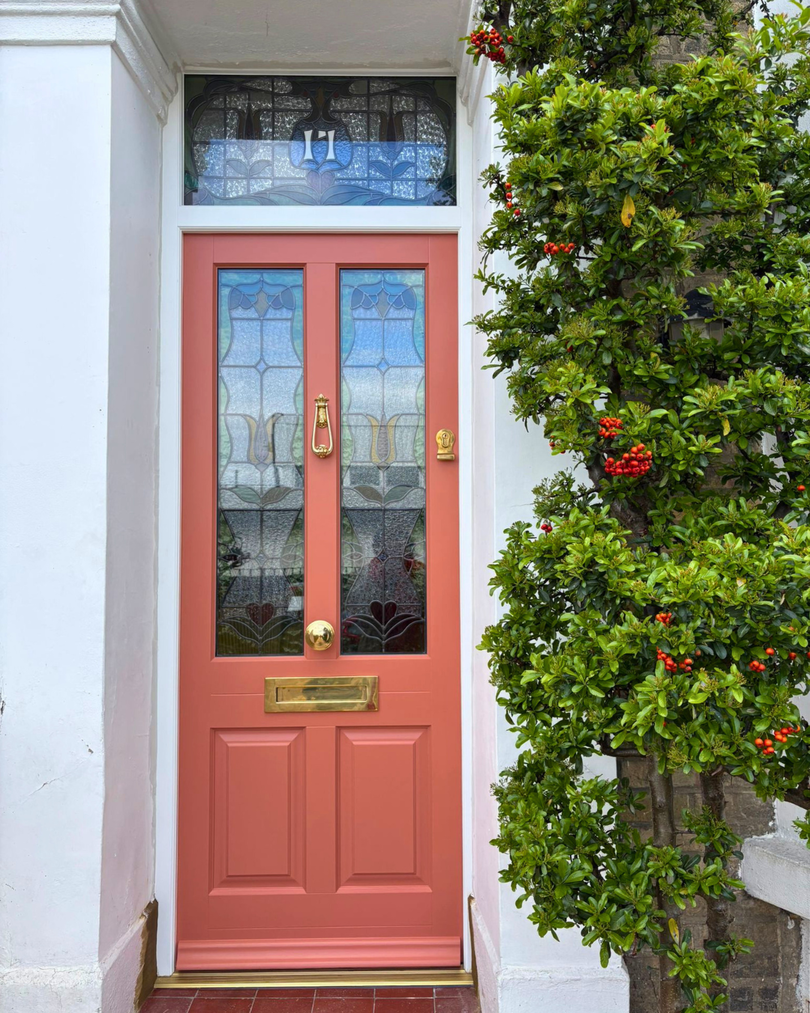
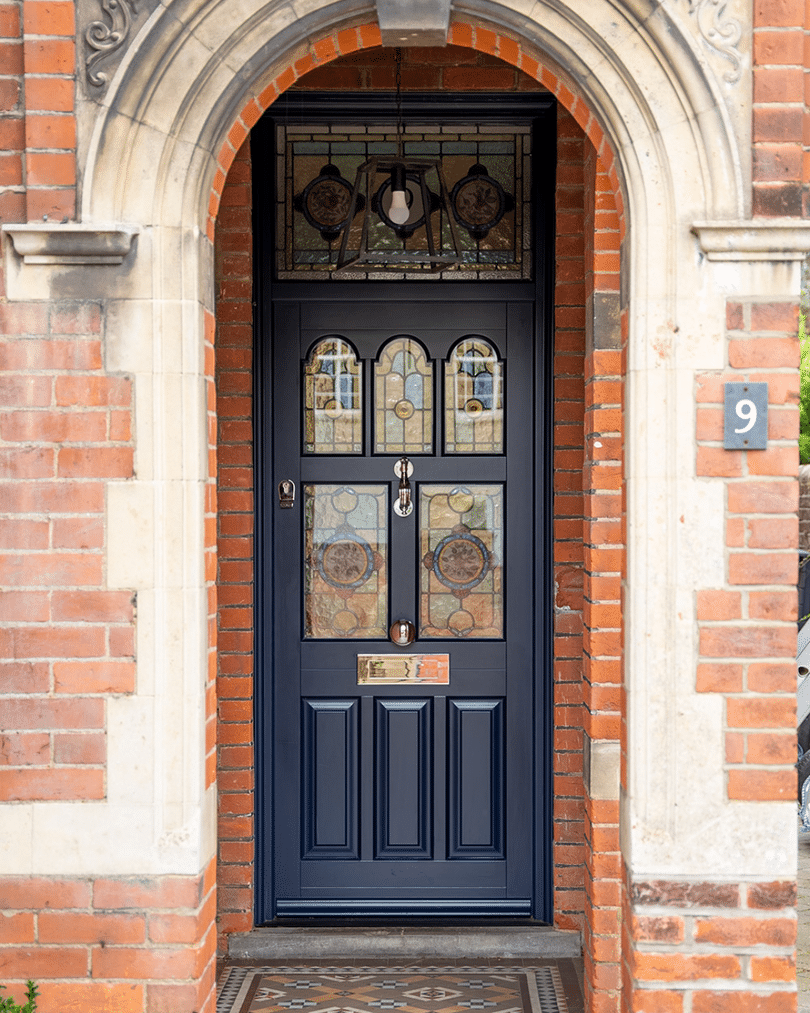
A front door does not have to be solid; if your hallway is dark, adding glazing can bring in considerably more daylight. This is especially useful in a terraced house where the front entrance may lead straight into a narrow hallway with little natural light. However, practically you should also consider privacy.
You may not want people walking past to be able to see directly into your hallway. Fortunately, there are plenty of types of glass that can give you light without giving a clear view inside.
Obscured and textured glass are obvious choices, while decorative glazing can add another layer of character. On a period property, glazing bars or stained glass can look very effective.
The style of the glass is worth considering carefully. A very modern pane can make an otherwise traditional door feel surprisingly contemporary, while the right decorative design can make the whole entrance feel complete.
Front door colours for terraced houses

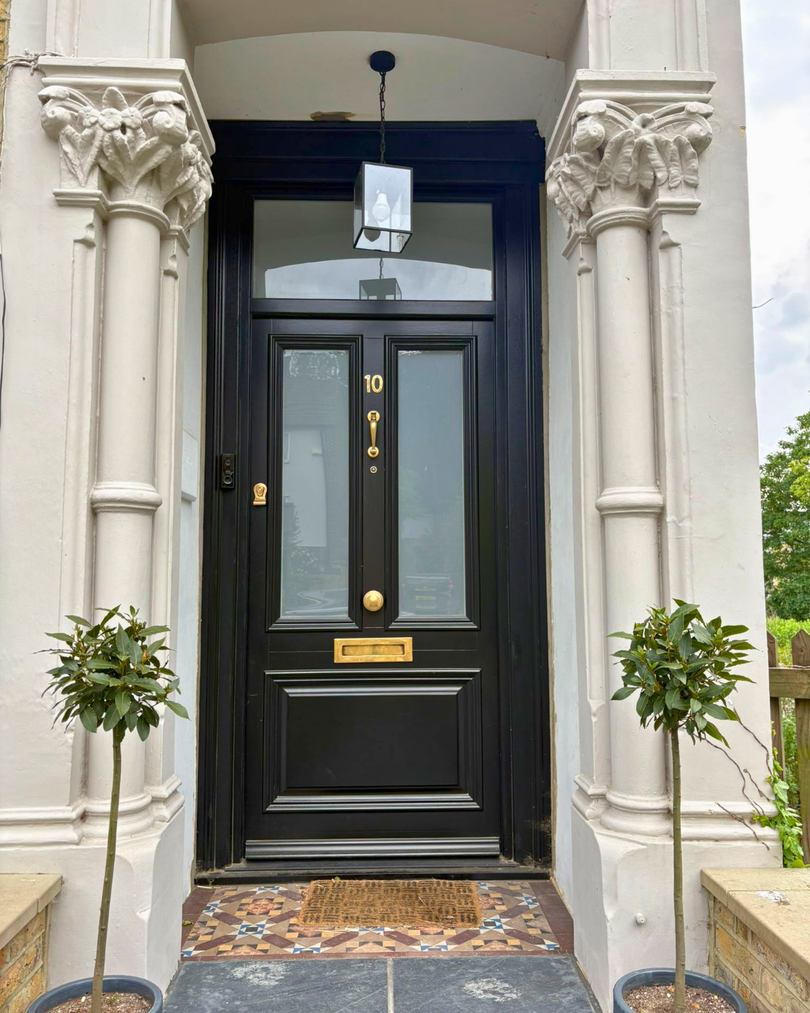
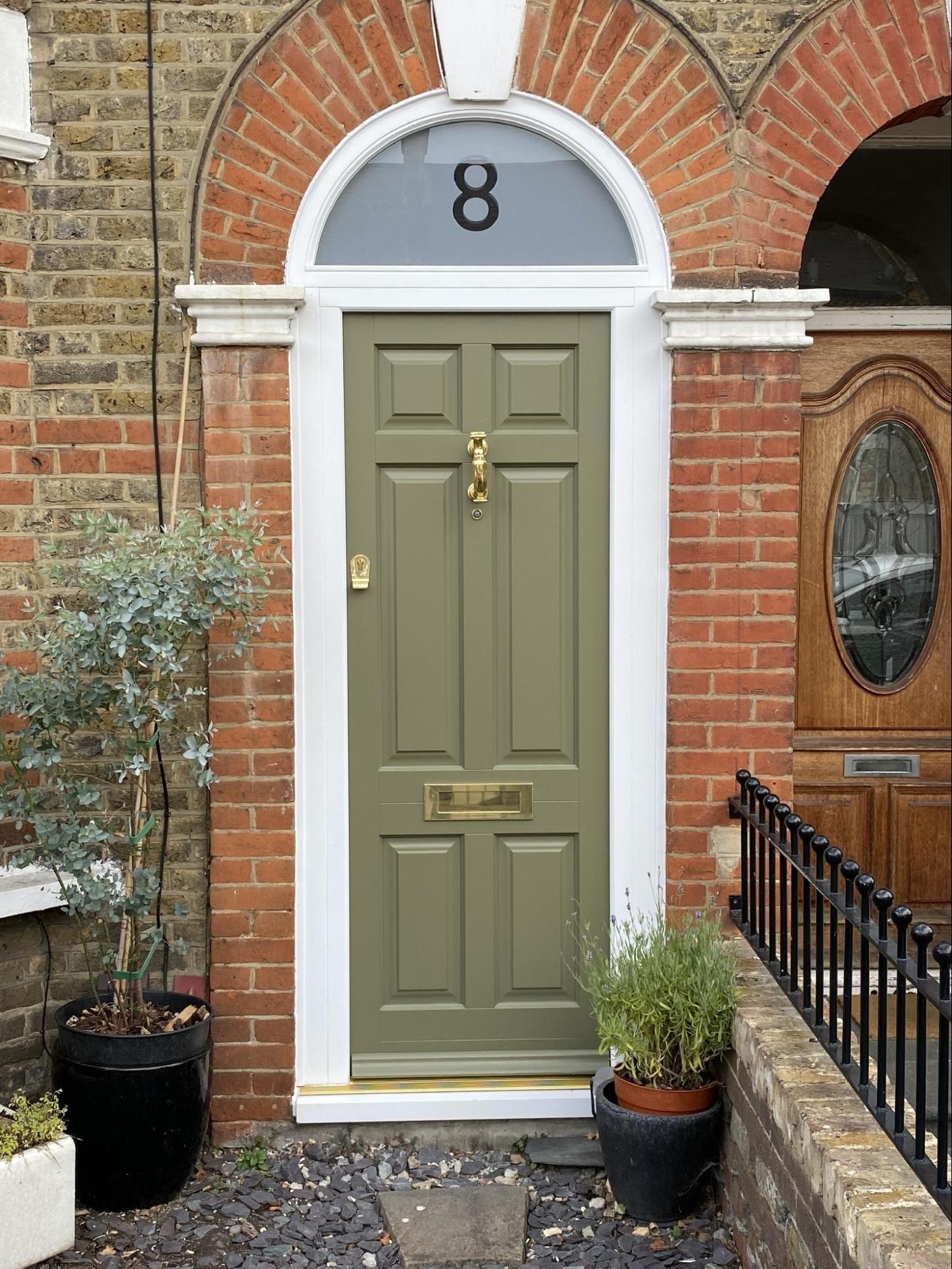
Colour is probably the simplest way to change the appearance of a front door. Black remains a classic for a reason. It works with most brick colours and architectural styles and can give a traditional entrance a smart, understated finish.
Deep greens and navy blues are also particularly good on period properties such as Victorian. They have enough colour to give the entrance some personality without becoming overwhelming.
If you have red brick, try looking at deeper, slightly muted shades rather than very bright colours. Burgundy, dark green, navy and charcoal can all sit well against warm brick.
London stock brick gives you a little more flexibility. Its softer, yellow-brown tones work particularly well with dark blue, green, black and a range of warmer neutral shades.
Of course, there is nothing wrong with choosing something more noticeable if that’s what you like such as pink, aubergine or yellow. Your front door is one of the easiest places to add a bit of personality to the outside of your home.
Just remember to consider the other colours around it. Look at your brickwork, windows, roof, paving and any existing paintwork before settling on a shade.
And if you’re making changes to a period property in a conservation area, check whether there are any restrictions first.
Could a sidelight make a difference?
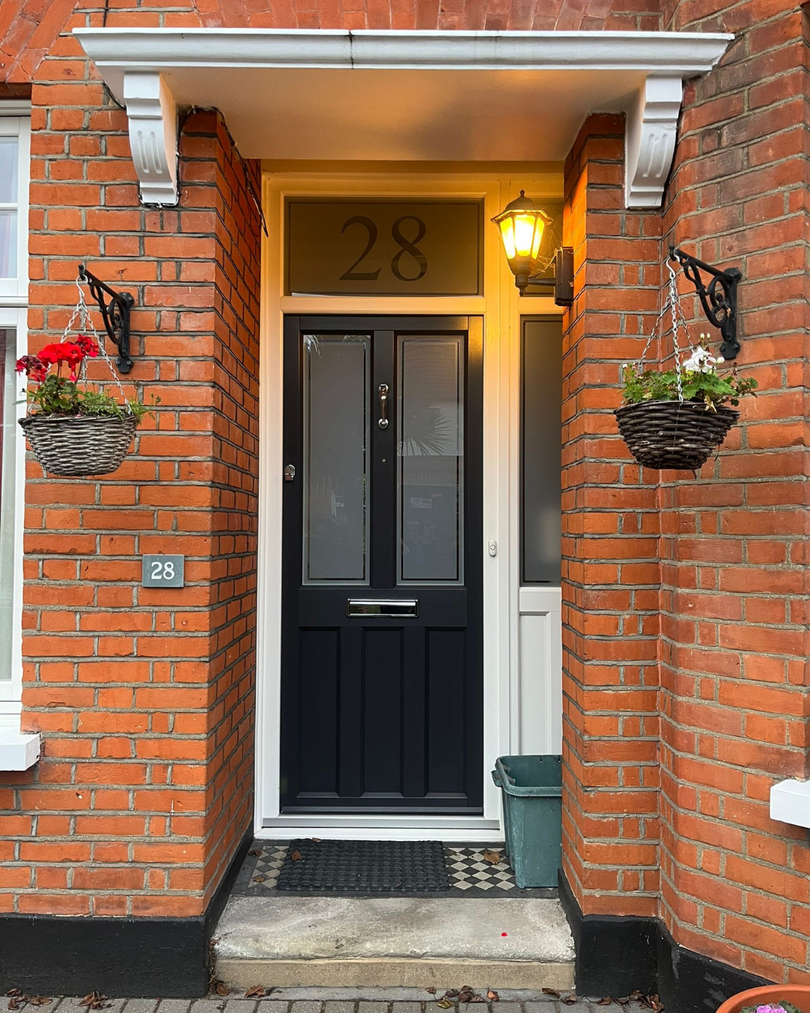
Some terraced houses have enough space beside the front door for a sidelight, while others simply don’t. If yours does, it’s an option worth considering.
A glazed sidelight can bring extra daylight into the hallway and can make the entrance appear wider. It can also be a good way of introducing decorative glass without putting a large glazed section into the door itself.
For a traditional property, a narrow sidelight with glazing bars can look very good alongside a panelled door.
You do have to consider proportions as a sidelight shouldn’t dominate a relatively small front. The size of the opening, the width of the door and the amount of glass all need to work together.
If you’re replacing the complete entrance, this is something worth discussing with the window and door company rather than deciding on the door design in isolation.
Timber, composite or timber alternative?
The material you choose will affect more than just how the door looks.
Timber
Genuine timber is difficult to replicate completely. You get the natural grain, the ability to create traditional details and a huge choice of paint colours.
It is particularly well suited to older or conservation properties where authenticity is important.
The downside is maintenance. Timber doors need looking after, and their finish will eventually need attention. How often that happens depends on the door, finish and exposure, but it is something to factor into the decision.
Composite
Composite doors have become much more versatile. They can now be made in traditional styles, with different panel arrangements, glazing and colours, so they don’t necessarily have the distinctly modern appearance some people associate with composite doors. They are also a very practical option if low maintenance is a priority on your list.
At Elwyns, we work with composite door suppliers including Fortrezz and Palladio, giving homeowners a range of styles to consider.
Timber alternative
A timber alternative door sits somewhere between the two. Evolution’s range is designed to replicate many of the visual details associated with traditional timber, while requiring less ongoing maintenance. For a period terraced house, that can be a useful compromise if you want the appearance of timber but don’t want to spend as much time maintaining it.
There isn’t one right material for every house. It comes down to what matters most to you, whether that’s authenticity, maintenance, performance, budget or a combination of all four.
The small details matter
Once you’ve chosen the door itself, don’t rush past the hardware.
A traditional door with the wrong furniture can look surprisingly different from the same door with carefully chosen hardware.
A brass or aged finish can work beautifully with a Victorian-style entrance. Black furniture can give a more understated appearance, while chrome or satin finishes can introduce a more contemporary feel.
Think about the letterplate, knocker, handle and any visible hinges as a group rather than choosing each one separately.
Your house number is another small detail that can make a difference. So can the outside light.
These things don’t need to be expensive. They just need to look as though they belong together.
Don’t forget the entrance around the door
Sometimes a new front door is fitted and the homeowner is disappointed because it doesn’t have quite the impact they expected.
Often, the door isn’t the problem.
The surrounding entrance has a lot to do with how it looks. Tired paintwork, an old light, a dated house number or an untidy path can make even a beautiful new door feel less impressive.
You don’t necessarily need to renovate the whole frontage. A few relatively small changes can make the entrance feel much more finished.
If the door is recessed, for example, consider how the surrounding brickwork and lighting frame it. If there is a small porch, think about whether its colour and materials work with the new door.
The aim isn’t to make everything match perfectly. A little contrast is often a good thing.
Should your door match your windows?
Not necessarily. There is a difference between creating a connection and making everything identical.
If your terraced house has traditional sash windows, a traditionally proportioned front door will usually sit more comfortably alongside them than a modern design. Matching the colour of the door and windows can create a particularly cohesive look, but you could also use the door as a contrasting feature.
For example, dark blue windows with a slightly brighter blue front door can work well, while neutral windows allow the door to become more of a focal point.
If you’re replacing both windows and the front door, choosing them together can make this much easier. You can compare colours, sightlines, glazing and hardware rather than trying to match everything afterwards.
Let the door reflect the house
One of the nice things about terraced houses is that you don’t need a huge frontage to make an impression.
You could choose a simple painted timber door in a classic colour, something with unique stained glass that picks up colours from the surrounding brickwork or a bold green that you’ve always loved. The best front door isn’t necessarily the most elaborate one. It is the one that looks right for the house and works for the people living in it.
Choosing a new front door for your terraced house
Replacing a front door is a relatively small change compared with renovating an entire house, but it can have a big effect on the way the property looks.
For traditional terraced houses, timber, timber alternative and traditionally styled composite doors can all work well. The right glazing can brighten a dark hallway, while colour and hardware give you plenty of opportunity to make the entrance your own.
It’s also worth seeing doors and colours in person. A colour viewed on a screen won’t necessarily look the same against your brickwork, and the difference between timber, composite and timber alternative can be much easier to appreciate when you can see and handle the products yourself.
At Elwyns, we’ve been helping homeowners choose windows and doors for more than 60 years. Our showrooms in Carshalton, Dulwich and Woldingham give you the opportunity to compare different door styles, materials, colours, glazing and furniture before making a decision.
If you’re planning to replace the front door of a terraced house, we’d be happy to help you work out what will suit both the property and your wants.